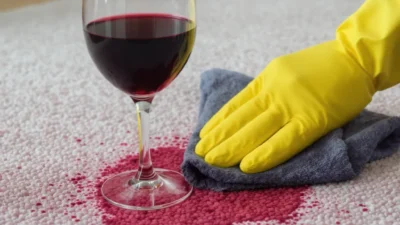
Picture this: a glass of red wine tips over, and a dark bloom spreads across your favorite rug. In that split second of panic, your mind races—what do you grab? Club soda? Dish soap? The wrong choice in that moment, driven by not knowing your rug’s fiber, can turn a simple spill into a permanent stain or, worse, damage the material itself. This definitive carpet and rug stain removal guide is designed to replace that panic with a calm, methodical protocol. We’re moving beyond one-size-fits-all advice to a smarter system: first, identify your fiber (its cleaning personality dictates the rules), then classify the spill (its chemistry determines the weapon). Organized as a clear playbook, this approach builds the confidence to tackle most household accidents correctly, preserving your floors and your peace of mind.
The right way to tackle a carpet stain starts with two identifications: your rug’s fiber type and the nature of the spill. Match a gentle, appropriate cleaning solution to this combination, always blotting from the edges inward, and you can resolve most accidents without calling a professional. Remember, the universal rule is to blot, never rub, to avoid driving the stain deeper into the fibers.
Step 1: The Universal Stain Response Protocol
Before you even think about fiber or spill type, this 10-step sequence is your non-negotiable first aid for any carpet or rug stain. Following it prevents panic-driven mistakes and sets the stage for effective treatment.
- Act Fast: Speed is critical. Fresh spills are far easier to manage than set-in stains.
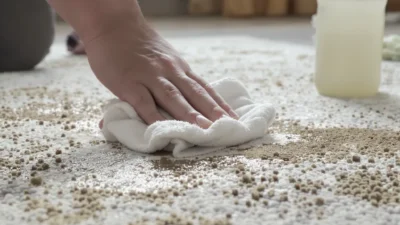
- Blot, Never Rub: Use a clean, white, absorbent cloth or paper towel. Press down firmly to soak up the liquid, lifting straight up. Rubbing grinds the stain deeper into the fibers and can cause permanent distortion.
- Work from the Outside In: Always start your blotting at the outer edges of the stain, moving toward the center. This contains the spill instead of spreading it.
- Identify the Spill: If you didn’t see it happen, try to identify the substance. Smell and color can be clues. Knowing what you’re dealing with is half the battle.
- Identify the Fiber: Check the rug’s tag or documentation. If that’s not available, perform a burn test on a single clipped fiber (in a safe, well-ventilated area) or refer to the manufacturer’s website. This step is the cornerstone of stain removal by rug fiber.
- Test Your Cleaner: Always test your chosen cleaning solution on a hidden area of the carpet (like inside a closet or under furniture) first. Wait for it to dry completely to check for colorfastness or texture changes.
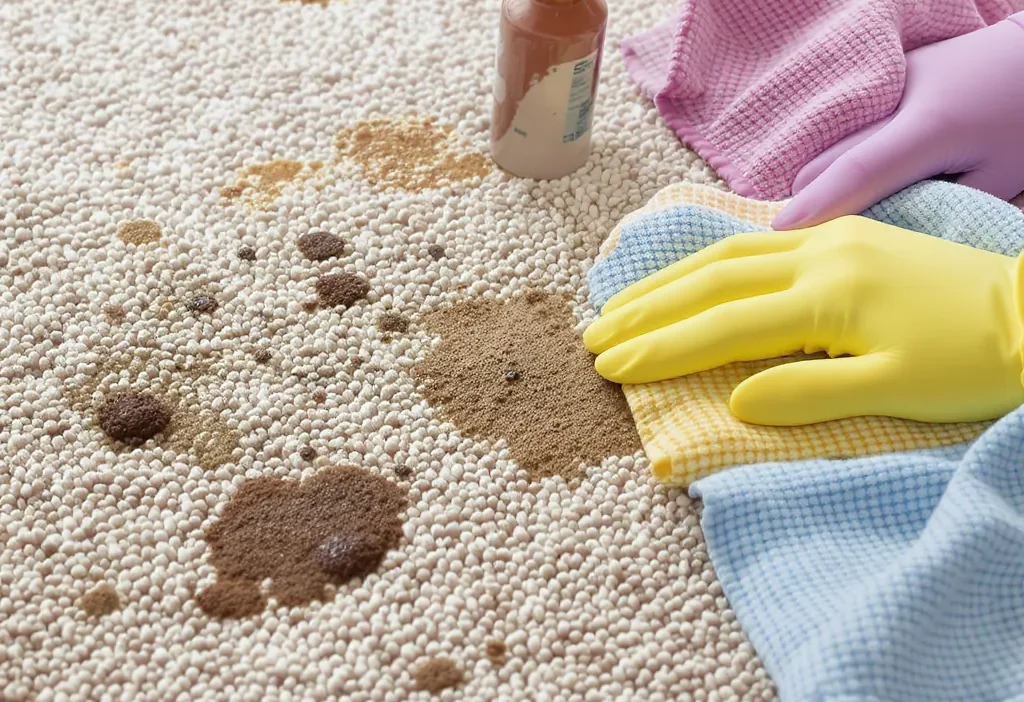
- Apply Solution Sparingly: Don’t flood the area. Apply your pre-approved cleaner to your cloth first, not directly onto the stain, or use a spray bottle on a mist setting.
- Blot and Rinse: Blot with the cleaning solution, then blot with a cloth dampened with clean water to rinse out any cleaning residue.
- Extract Moisture: After rinsing, press dry towels over the area or use a wet/dry vacuum to pull out as much moisture as possible.
- Dry Thoroughly: Allow the area to air dry completely. Use fans or open windows to accelerate drying and prevent mold or mildew. Avoid walking on it until it’s dry.
Know Your Fiber: The Cleaning Personality of Carpet & Rug Materials
The single most important factor in your carpet spot cleaning guide isn’t the stain—it’s what your floor covering is made of. Fibers have distinct chemical personalities that dictate what they can tolerate. Misunderstanding this is how permanent damage occurs.
Natural Fibers (Handle with Care)
These plant or animal-based fibers are beautiful but often more delicate. Their organic structure reacts strongly to pH and heat.
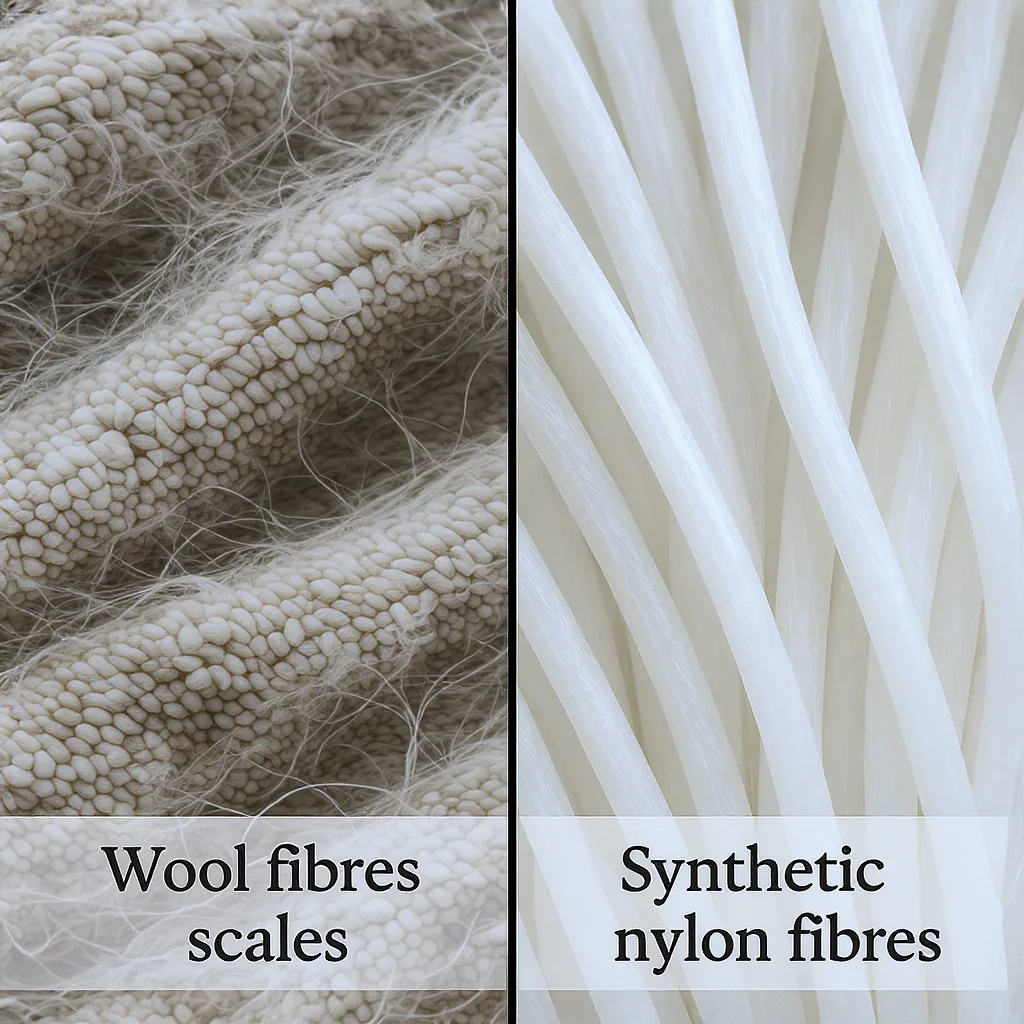
- Wool: A protein fiber. Its scaly structure can felt (shrink and mat) with heat, agitation, and extreme pH shifts. Cardinal Rule: Use only cool water, avoid alkaline cleaners (like many all-purpose cleaners), and never rub. Mild, wool-safe detergents are a must.
- Cotton & Silk: Plant-based (cellulose) and protein fibers, respectively. They can be prone to color bleeding and watermarks. Gentle, pH-neutral cleaning is essential. Silk, in particular, requires extreme care and often professional attention for anything beyond a water blot.
Synthetic Fibers (Generally More Forgiving)
Man-made fibers are engineered for durability and stain resistance, but they have their own quirks, primarily related to heat sensitivity and dye stability.
- Nylon: The most common carpet fiber. It’s tough and stain-resistant but has a strong affinity for dye, meaning some spills can bond if not treated quickly. It can be heat-sensitive. Most mild cleaners are safe, but always test.
- Polyester: Excellent stain resistance due to its hydrophobic (water-repelling) nature, making it great for oil-based spills. However, it’s more prone to oil-based staining and can be damaged by high heat.
- Olefin (Polypropylene): Highly resistant to moisture, mildew, and many chemicals, making it ideal for basements or outdoors. It is, however, very sensitive to heat and can melt. Use cool water and avoid solvents unless specified as safe.
Spill Taxonomy: Classifying Your Enemy for Effective Treatment
Not all spills are created equal. Grouping them by their chemical composition tells you how to break them down. This is the second half of the identification system you need for a successful carpet and rug stain removal strategy.
Water-Based & Sugar-Based Spills
Examples: Soda, juice, beer, syrup.
Character: These are often the simplest. The primary goal is to remove the sugary residue to prevent a sticky, dirt-attracting spot. Dilution with water and a mild detergent is usually effective.
Protein-Based Spills
Examples: Blood, milk, egg, vomit.
Character: Protein molecules coagulate (think cooking an egg) with heat. Using hot water is the worst thing you can do, as it “sets” the stain permanently. Cold water and enzymatic cleaners, which break down proteins, are required.
Tannin-Based Spills
Examples: Coffee, red wine, tea, fruit juice (like grape).
Character: Tannins are plant-based dyes. They can bond to fibers, especially natural ones. An acidic solution, like diluted white vinegar, can help break this bond. Blotting immediately with club soda (carbonic acid) is a classic first-aid move for a reason.
Oil & Grease-Based Spills
Examples: Cooking oil, butter, makeup, grease.
Character: Water-based cleaners will bead up and fail. You need a detergent that can emulsify the oil (like dish soap) or, for heavier grease, a dry-cleaning solvent applied sparingly.
Dye-Based Spills
Examples: Ink, hair dye, food coloring.
Character: These are pigments designed to stain. Quick action is paramount to prevent the dye from bonding. Rubbing alcohol (isopropyl) can be effective on synthetics for some inks, but it’s a harsh chemical that requires a test and caution.
The Fiber x Spill Matrix: Your Actionable Playbook
This is your core reference. Match your fiber column to your spill row for a targeted action plan. Remember: always test first and follow the universal protocol.
For Synthetic Fibers (Nylon, Polyester, Olefin)
- Water/Sugar-Based: Blot up excess. Mix 1 tsp clear, mild dish soap (like Dawn) with 1 cup warm water. Apply, blot, rinse with clean water, blot dry.
- Protein-Based: Use cold water only. Blot with a cloth soaked in cold water. For persistent stains, a commercial enzyme cleaner (following label instructions) is your best bet.
- Tannin-Based: Blot. Mix 1 part white vinegar with 2 parts cool water. Apply, let sit for 15 minutes, blot, then rinse with water and blot dry. For wine, an immediate blot with club soda can help.
- Oil/Grease-Based: Sprinkle baking soda or cornstarch to absorb fresh grease. For residue, use a few drops of the same mild dish soap directly on the stain, work in gently, then rinse and blot.
- Dye-Based (Ink): Test first! Dampen a cotton ball with rubbing alcohol (70% isopropyl). Dab (don’t rub) the stain from the outside in. The dye should transfer to the cotton ball. Rinse with water and blot dry.
For Natural Fibers (Wool, Cotton)
- Water/Sugar-Based: Blot with cool water only. If needed, use a tiny amount of wool-safe detergent (pH neutral) in cool water. Rinse thoroughly with cool water and blot dry. Never saturate.
- Protein-Based: Cold water only. Blot repeatedly with a cloth soaked in cold water. Consider a wool-safe enzyme cleaner. Never use heat.
- Tannin-Based: This is tricky. For wool, avoid vinegar as it can damage the fiber. Blot with cool club soda, then with cool water. For cotton, a very diluted vinegar solution (1:4 vinegar to water) can be tested. Often, for valuable rugs, calling a professional is the safest choice for tannin stains.
- Oil/Grease-Based: Apply cornstarch or baking soda, let sit for hours to absorb, then vacuum. For residue, a tiny amount of wool-safe detergent may be used with extreme care.
- Dye-Based: Do not use rubbing alcohol on wool or delicate cotton. Blot with cool water immediately. For serious dye spills on valuable natural fiber rugs, professional intervention is almost always required to prevent setting the stain or damaging the fiber.
Common Stain Removal Mistakes That Set Stains or Damage Fibers
Even with good intentions, it’s easy to make a stain worse. Here are the most frequent errors that undermine your carpet spot cleaning guide efforts.
- Using Hot Water on Protein Stains: This “cooks” the proteins (blood, milk, egg) into the fiber, making the stain nearly permanent. Always use cold water for these.
- Rubbing Vigorously: Scrubbing seems logical, but it abrades the fiber tips, causing them to fray and look worn. It also pushes the stain deeper into the carpet backing. Blotting is the only correct technique.
- Over-wetting the Carpet: Soaking the area can cause the backing to delaminate (separate) or the adhesive to fail. It also drastically increases drying time, raising the risk of mold and mildew growth in the pad underneath.
- Using Harsh Chemicals on Delicate Fibers: Applying bleach, ammonia, or strong alkaline cleaners to wool can dissolve the protein structure. Always match the cleaner’s pH and strength to the fiber’s tolerance.
- Skipping the Spot Test: Assuming a cleaner is “safe” is a gamble with your floor’s appearance. Color transfer or texture change on a hidden spot is a warning you can’t afford to miss.
- Applying Store-Bought “Miracle” Sprays Blindly: Many all-purpose stain removers contain bleach, solvents, or high-alkaline formulas that can damage certain fibers or set certain stains (like tannins). Read labels and know your fiber first.
- Not Extracting Enough Moisture: Leaving the carpet damp invites dirt to re-soil the area as it dries, creating a new, ring-shaped stain. Press firmly with dry towels after rinsing.
From Reaction to Prevention: Protecting Your Investment
While this protocol equips you to handle most household accidents, the most effective stain removal by rug fiber strategy is the one you never have to use. Shift your focus from damage control to damage prevention. Consider using high-quality, washable area rugs in dining rooms, hallways, and other high-traffic zones. For wall-to-wall carpet, a professional application of a fabric protector can provide a crucial barrier against many spills, giving you precious extra time to react.
Regular, thorough vacuuming is also a form of stain prevention, removing abrasive dirt particles that can grind into fibers and make them more susceptible to staining. Finally, assemble a basic stain removal kit: white cloths, mild detergent, white vinegar, and a spray bottle. Keep it handy, so you’re never scrambling when a spill happens.
Armed with the knowledge of fiber personalities and spill categories, you’re no longer at the mercy of an accident. You have a calm, methodical playbook. That confidence is the ultimate stain repellent.
The core principle of effective carpet and rug stain removal is a two-part identification system: first, know your fiber (delicate natural vs. durable synthetic), and second, classify your spill (protein, tannin, oil, etc.). Your cleaning solution and technique must match this combination. Always begin with the universal protocol—blot, don’t rub, work from the outside in, and test cleaners in a hidden area. Keep a simple kit of mild soap, white vinegar, and clean cloths accessible. With this structured approach, you can resolve most common spills and preserve the life and look of your floors.