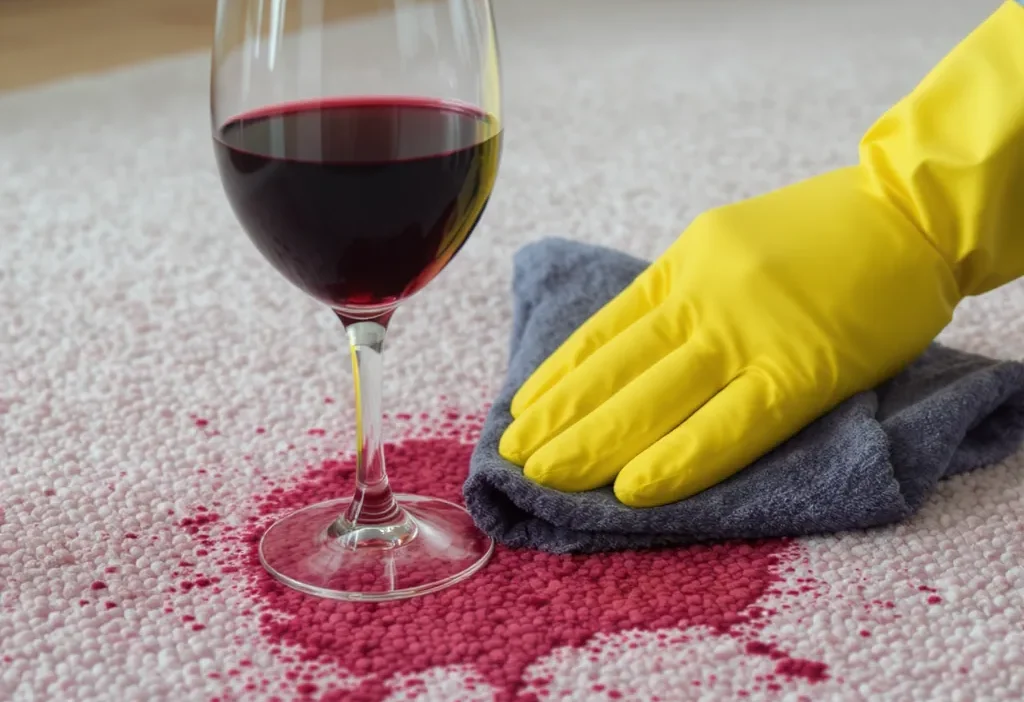
That heart-sinking moment when a glass of red wine tips over onto your carpet is a universal experience. The vivid splash seems to scream “permanent damage,” triggering a wave of panic. But here’s the crucial truth that changes everything: your success in this mission doesn’t depend on luck or some secret potion. It hinges entirely on one simple factor—whether the stain is fresh or has already set in. This article isn’t just another list of tips; it’s your definitive, calm-bringing protocol playbook. We’re cutting through the noise to give you two clear, actionable checklists: one for the critical first minutes of a new spill, and a completely different, targeted strategy for tackling a dried, set-in wine stain carpet. Knowing which battle you’re fighting is the first and most important step to getting your carpet back to spotless.
To remove a red wine stain from carpet, your strategy depends entirely on timing. For a fresh spill, immediate blotting and absorption are key—grab a white cloth, press firmly (never rub), and use salt or club soda to pull the liquid from the fibers. For a set-in stain that’s dried, you’ll need a targeted cleaning solution to break down the settled pigments, like a mix of dish soap and hydrogen peroxide. With the right approach for the right scenario, both fresh and old stains are salvageable.
The Critical First 60 Seconds: Your Fresh Spill Protocol
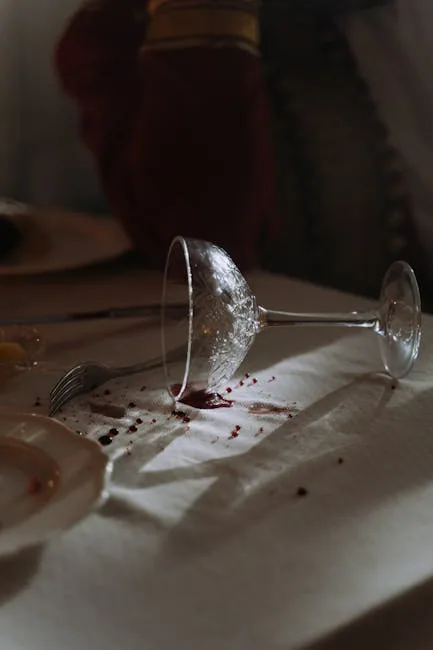
Photo by cottonbro studio on Pexels
Speed is your greatest ally. The goal here is to prevent the wine from soaking deep into the carpet fibers and backing. Follow this sequence the moment the spill happens to clean red wine from rug effectively.
- Contain and Blot. Grab a stack of clean, white, absorbent cloths or paper towels. Gently place them over the spill and press down firmly. Do not rub. Rubbing grinds the pigment into the fibers and spreads the stain. Lift, check, and move to a dry section of the cloth as the wine transfers. Continue until you’re no longer pulling up liquid.
- Apply an Absorbent. Liberally cover the damp area with plain table salt, baking soda, or cornstarch. These powders will wick moisture upward from the carpet. Let it sit for 10-15 minutes, then vacuum thoroughly.
- Use a Mild Liquid. If a faint stain remains, mix one tablespoon of clear dish soap with two cups of cool water. Alternatively, pour a small amount of club soda (the carbonation can help lift stains) directly on the spot. Using a clean, damp white cloth, gently dab the solution onto the stain, working from the outside in.
- Rinse and Dry. This step is non-negotiable. Rinse the area by dabbing with a cloth dampened with plain cool water to remove any soapy residue. Press with a dry towel to absorb as much moisture as possible. Place a fan over the area or ensure good airflow to dry it completely. A wet carpet pad can lead to mold or mildew.
When Time Has Passed: The Set-In Stain Salvage Guide
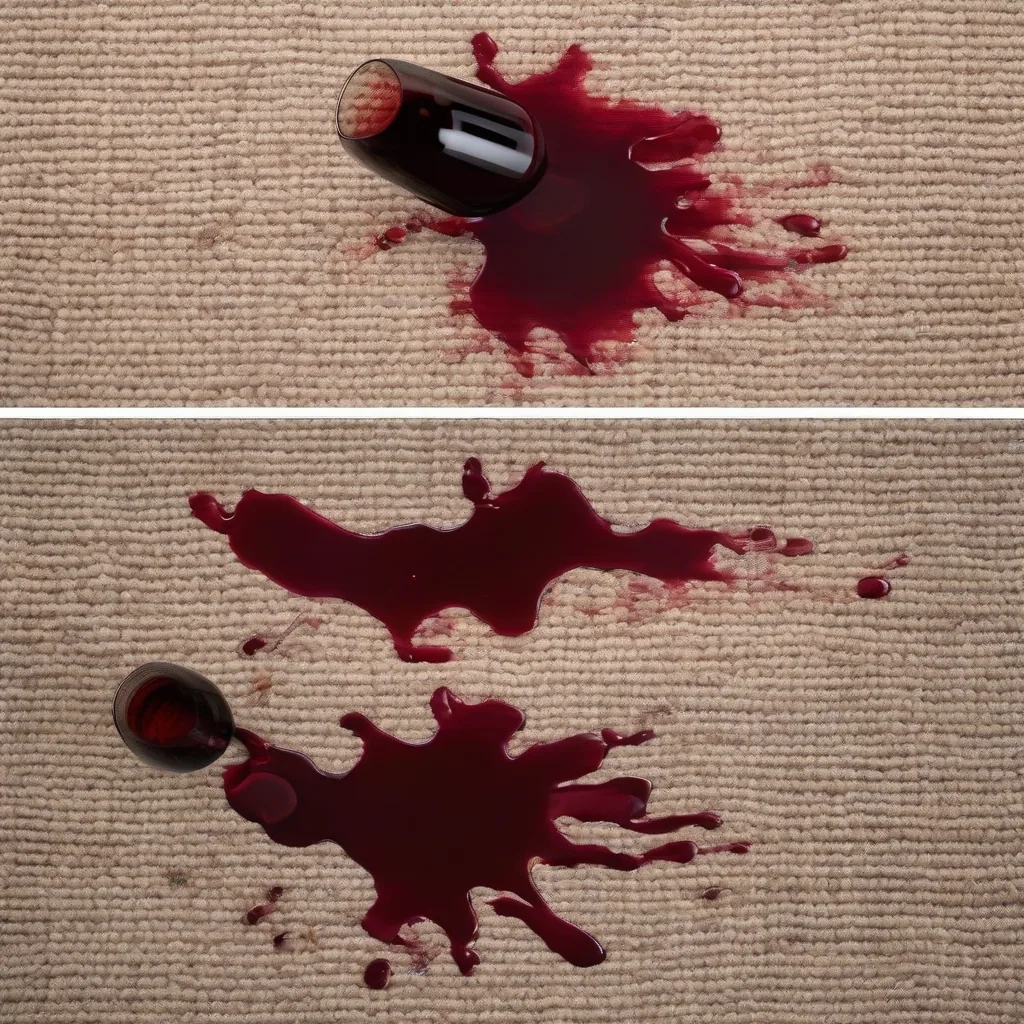
A set-in wine stain carpet scenario requires a different tactic. The pigments have bonded with the fibers, so simple absorption won’t work. Now, you need a cleaning agent to break down the stain before extraction.
- Vacuum Any Residue. Start by vacuuming the stained area to remove any dried particles or old powder treatments.
- Apply a Targeted Cleaning Solution. For a safe and effective DIY mix, combine 1 tablespoon of clear dish soap, 1 tablespoon of white vinegar, and 2 cups of warm water in a spray bottle. For tougher stains on colorfast carpets, you can use a solution of one part 3% hydrogen peroxide to two parts water. Always test any solution on an inconspicuous area of your carpet first.
- Agitate Gently. Spray the solution onto the stain. Using a soft-bristled brush (an old toothbrush works well) or your fingers protected by gloves, gently work the solution into the fibers. Let it sit for 5-10 minutes to penetrate.
- Rinse Thoroughly. Blot aggressively with a clean, damp white cloth to lift the dissolved stain and cleaning solution. Change cloths frequently. Continue rinsing and blotting until the cloth comes away clean.
- Dry Completely. As with a fresh spill, press dry with towels and use airflow. This final carpet wine spill removal step ensures no moisture is left behind to wick old stains back to the surface.
Essential Tools & Safe Solutions (What to Have on Hand)
Being prepared removes panic. Keep these items in a dedicated cleaning caddy so you can spring into action for any carpet stain removal guide moment.
Tools:
- White, absorbent cloths or paper towels (color can bleed)
- A dull knife or spoon for scraping up solids
- A spray bottle for applying solutions
- A soft-bristled brush or old toothbrush
- A wet/dry vacuum can be a game-changer for the final rinse
Safe Solutions:
- Club Soda: Useful for fresh spills; the bubbles can help lift stains.
- White Vinegar: A mild acid that helps break down wine’s tannins.
- Clear Dish Soap: A degreaser that helps suspend stains for removal.
- 3% Hydrogen Peroxide: A mild bleaching agent effective on organic stains. Test first and avoid on dark or delicate carpets.
Avoid: Colored cloths, bleach (can destroy carpet dye), and hot water (can set protein-based stains).
Common Mistakes That Make Stains Permanent
Knowing what not to do is half the battle. These errors are the main reasons a simple spill becomes a permanent old wine stain remedy failure.
- Don’t Rub. This is the cardinal sin. It pushes the wine deeper into the carpet backing and frays the fibers, making the stain larger and more embedded.
- Don’t Use Hot Water. Heat can set protein and tannin stains, essentially cooking the wine into the fibers. Always use cool or lukewarm water.
- Don’t Use Colored Cleaning Cloths. The dye from a patterned or colored towel can transfer to your damp carpet, creating a new, more complicated stain.
- Don’t Skip the Rinse Step. Leaving soap or cleaning solution in the carpet acts as a sticky magnet for dirt, causing rapid re-soiling and a dull, sticky patch.
- Don’t Overwet the Carpet Pad. Soaking the carpet can cause the stain to wick back up as it dries (called “wicking”) and can damage the subfloor or lead to mold growth under the carpet.
Stay Calm and Clean On
The difference between a forgotten accident and a pristine carpet boils down to your immediate strategy. By understanding the fresh versus set-in protocols, you’ve equipped yourself with the knowledge to remove red wine stain from carpet effectively in either scenario. The panic is gone, replaced by a clear plan.
For ultimate peace of mind, consider assembling a small spill kit with white cloths, club soda, and your DIY cleaning solution. Stash it in a cabinet near your living or dining area. With the right tools and this checklist in mind, you can host—and toast—with confidence, knowing you’re prepared for any spill.