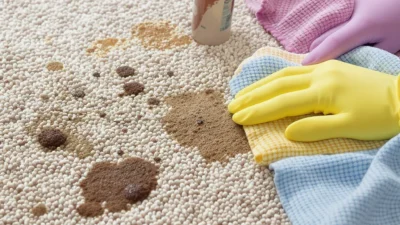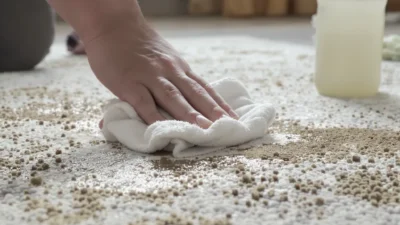
You’ve just had a candle spill on your carpet, and your first instinct is probably to grab a cloth and start scrubbing. Here’s the counterintuitive truth that could save your carpet: that colorful mess isn’t just wax. In fact, the real, permanent damage often comes from the dye, not the wax itself. Most people misdiagnose the problem, treating a dye stain like a wax residue, which is a surefire way to set the color into the fibers for good. To successfully remove candle wax from carpet, you must first understand the two distinct enemies you’re facing—the physical wax blob and the chemical dye stain—and then deploy the correct, targeted removal method for each. This guide cuts through the confusion, explaining the simple chemistry and giving you a clear diagnostic path to follow.
The best way to remove candle wax from carpet starts by identifying if you’re dealing with wax residue or a dye stain. For wax, freeze and scrape, then use heat and absorption. For dye, treat it like a standard colored stain with a solvent-based cleaner. Using the wrong method can set the stain permanently.
The Chemistry of a Candle Spill: Wax vs. Dye
To successfully clean a candle spill, you first need to understand what you’re actually dealing with. A colored candle spill isn’t one single substance; it’s two distinct components that require different removal strategies. Getting this wrong is why so many people end up with a permanent stain even after they think they’ve cleaned it up.
The first component is the wax. Whether it’s paraffin, soy, or beeswax, it’s essentially a hydrocarbon that melts when hot and hardens as it cools. On your carpet, it acts as a physical barrier—a lump or film sitting on and between the fibers. The process to remove candle wax from carpet is primarily a physical one: you need to change its state (solid to liquid) and lift it away.
The second, and often more troublesome, component is the dye or pigment. This is the chemical colorant that gives the candle its hue. When the hot, liquid wax spills, this dye can separate and penetrate deep into the carpet fibers, creating a true chemical stain. Treating colored wax residue on rug means you’re now in the realm of stain removal, which requires solvents to break the bond between the dye and the fiber.
Diagnosis Guide: Is It Wax or Dye?
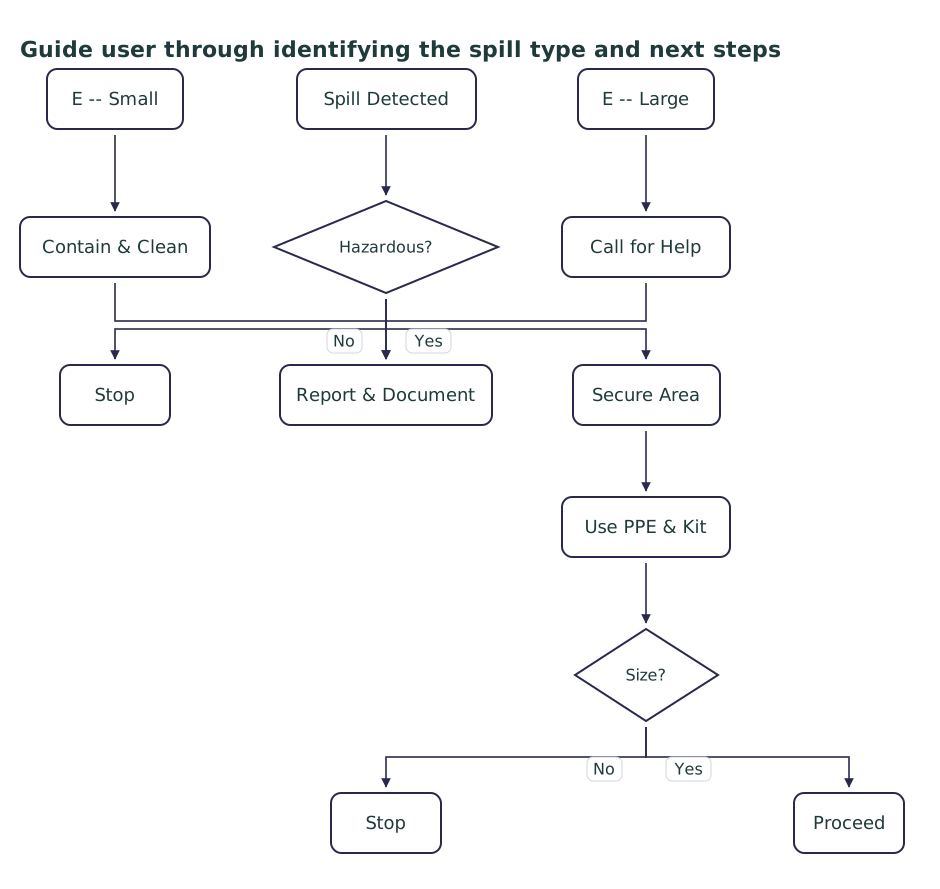
Before you grab any cleaning supplies, take two minutes to diagnose your spill. This quick check will tell you which protocol to follow and save you from making the stain worse.
Step 1: The Scrape Test
Once the wax is completely hardened, use the dull edge of a butter knife or a credit card to gently scrape the surface. What comes off?
- If it’s white/clear, flaky material: You’re primarily dealing with wax residue. The color you see might just be wax sitting on top of fibers.
- If the scraped material is colored, OR if the carpet fibers underneath are still deeply colored: You have a dye stain. The wax may be gone, but the pigment has bonded to the carpet.
Step 2: The White Cloth Test
This is the definitive check. After scraping away the top layer of wax, press a clean, white paper towel or cloth firmly onto the stained area. If any color transfers to the cloth, you have a dye problem that needs to be addressed separately after the wax is removed. This is the core of effective wax stain carpet removal—knowing your enemy.
The Wax-Only Removal Protocol
Use this method if your diagnosis points to wax as the main issue, or as the first step for a colored spill before you tackle the dye. The goal is to remove the physical wax without driving any remaining dye deeper.
Step 1: Freeze and Scrape
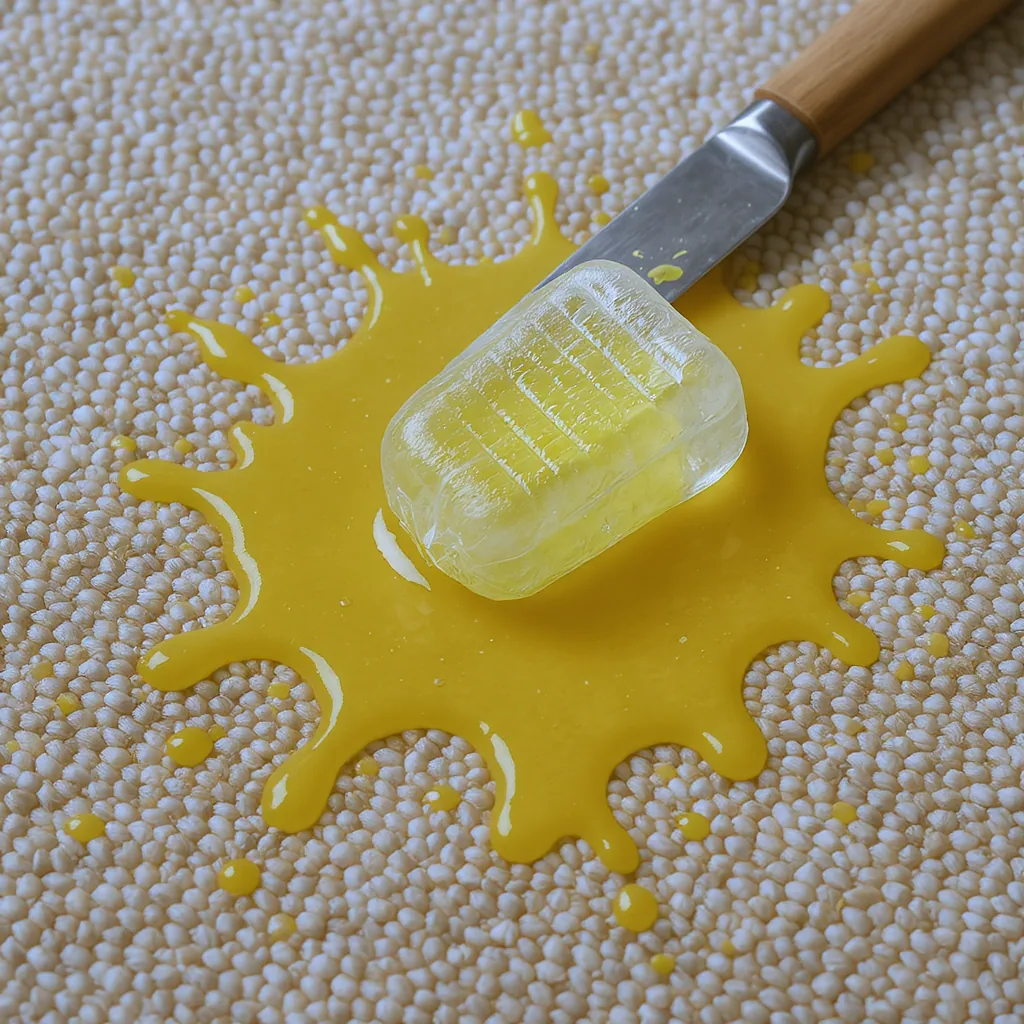
Harden the wax further to make it brittle. Place a plastic bag of ice cubes or a gel ice pack directly on the spill for 15-20 minutes. Once it’s very hard, use a blunt tool (butter knife, spoon handle, or a dedicated carpet scraper) to gently chip and scrape away as much of the wax as possible. Lift the pieces off; don’t rub them in.
Step 2: Heat and Absorb
Now, you’ll melt the remaining wax and pull it out. Place a few layers of plain, white paper towels or a brown paper bag (like a grocery bag) over the residue. Set a household iron to a low, dry heat (no steam). Gently iron over the paper, moving constantly. The heat will liquefy the wax, and the paper will absorb it. Replace the paper as it becomes saturated with wax. Continue until no more wax transfers.
This hardened wax carpet cleanup method is highly effective for pure wax. For more detailed safety tips on using heat on carpets, you can refer to guidance from cleaning experts like The Carpet and Rug Institute.
Tackling the Dye Stain (After the Wax is Gone)
If the white cloth test showed color transfer, you have a dye stain. This is a separate battle fought with solvents, not heat. Important: Always test any cleaner on an inconspicuous area of your carpet first to check for colorfastness.
Step 1: Apply a Solvent
Dye stains typically respond best to solvent-based cleaners. A common and effective option is isopropyl (rubbing) alcohol (70-90% strength). Dampen a clean white cloth with the alcohol—do not pour it directly on the carpet. Alternatively, you can use a dry-cleaning solvent formulated for carpets, following the product’s instructions.
Step 2: Blot, Don’t Rub
Place the damp cloth over the stain and press down firmly. Hold for 30 seconds to allow the solvent to penetrate. Then, using a fresh, dry part of the cloth, blot the area vigorously. You will see the dye transfer onto the cloth. Never scrub or rub, as this will fray the carpet fibers and spread the stain. Continue blotting with clean sections of cloth until no more color transfers.
For stubborn dye stain from candle spills, you may need to repeat the process. After the stain is gone, rinse the area by blotting with a cloth dampened with cool water, then blot dry with a towel. Allow it to air dry completely.
Save Your Carpet: Diagnose, Then Act
The difference between a saved carpet and a permanent stain boils down to a simple, two-minute diagnosis. Don’t assume every colored spill is just wax. Freeze and scrape first, then do the white cloth test. If you see color, you know you’re facing a dye stain that needs its own targeted treatment.
By separating the problem into its two parts—the physical wax and the chemical dye—you can apply the correct, effective solution for each. Your next step is clear: go look at your spill, run the quick tests, and follow the targeted protocol. With the right approach, that candle mishap doesn’t have to leave a lasting mark.