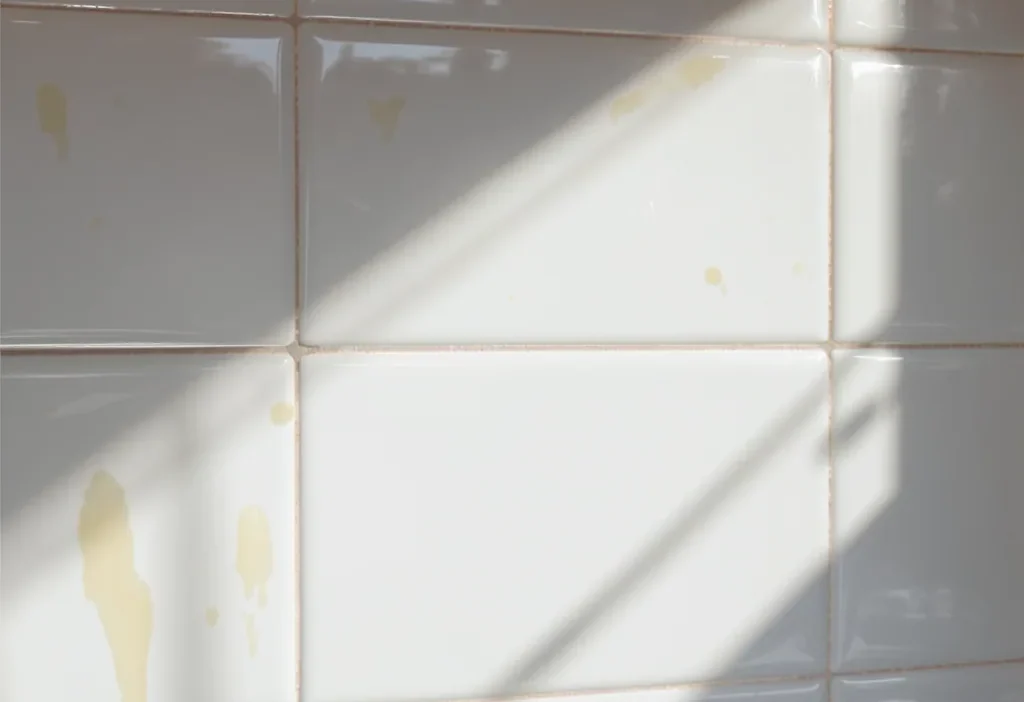
You’ve just finished a triumphant session at the stove—maybe frying bacon or searing a perfect steak. The meal was a success, but now your kitchen tile backsplash tells the tale: a constellation of tiny, stubborn grease dots has settled onto the surface. It’s more than an eyesore; that greasy film acts like a magnet for dust and kitchen grime, and over time, it can even work its way into and degrade porous grout. The instinct might be to grab the strongest cleaner or a rough scrubber, but that’s a fast track to dulling a glossy finish or etching delicate tile. The good news is that you can safely and effectively remove grease from a tile backsplash using simple, gentle solutions you likely already have at home, protecting your kitchen’s finish while getting it sparkling clean.
The safest way to remove grease from a tile backsplash starts with hot, soapy water for fresh splatter. For stubborn, baked-on grease, a paste of baking soda and water or a solution of diluted white vinegar cuts through it effectively without damaging the tile glaze or grout. Always start with the mildest option, like dish soap, and avoid abrasive scrubs or harsh acids, especially on natural stone like marble or limestone, to keep your backsplash looking its best.
Your Safe Cleaning Toolkit: What Actually Works
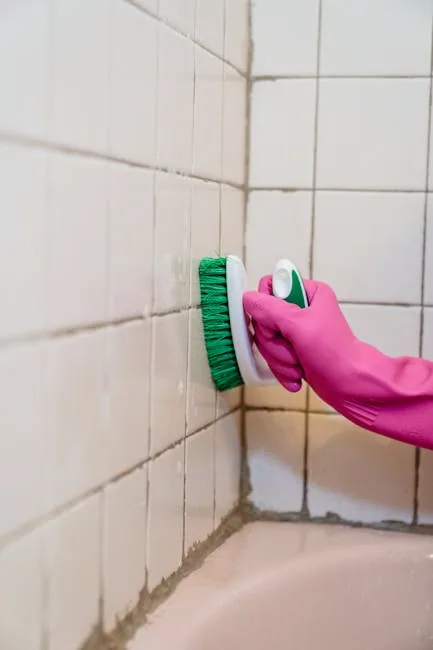
Photo by Liliana Drew on Pexels
Before you start scrubbing, assemble your kit. The best solutions for kitchen tile grease cleaning are likely already in your pantry or under your sink. Here’s your checklist, in order from gentlest to strongest:
- Dish Soap & Hot Water: Your first line of defense. Dish soap is a degreaser designed to emulsify oils, making it perfect for fresh splatter.
- Baking Soda Paste: Mix baking soda with a little water to form a spreadable paste. It’s a mild abrasive that lifts grease without scratching glazed tile, and its slight alkalinity helps break down grease.
- Diluted White Vinegar: A 1:1 solution of vinegar and water in a spray bottle. The acidity is excellent for cutting through polymerized, sticky grease. Critical note: Do not use on natural stone like marble or limestone, as it can etch the surface.
- Rubbing Alcohol (Isopropyl Alcohol): Useful for wiping away any final filmy residue after cleaning.
Tools: Use soft microfiber cloths, a soft-bristle brush (an old toothbrush works for grout), and a plastic scraper for any truly stubborn spots. Avoid at all costs: Steel wool, harsh green scrub pads, and abrasive powdered cleaners. They will permanently scratch and dull your tile’s finish.
The Step-by-Step Safe Clean (For Any Tile)
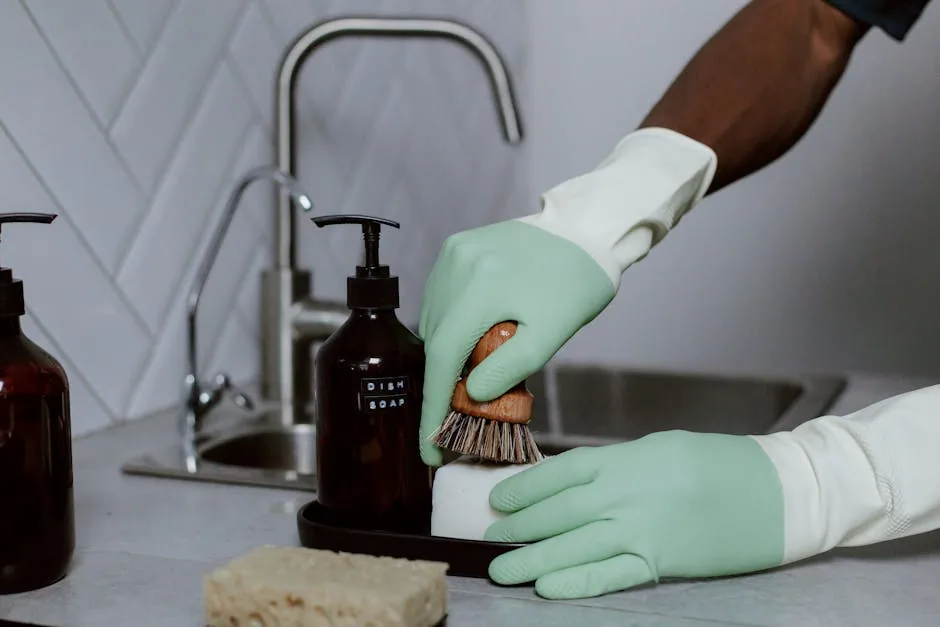
Photo by Ron Lach on Pexels
This universal method will help you clean greasy tile backsplash surfaces safely, whether you have ceramic, porcelain, or glass tile.
Do:
- Test First: Always test your chosen cleaner in an inconspicuous corner to ensure it doesn’t discolor grout or affect the tile.
- Start Mild: Begin with hot, soapy water. Often, this is all you need for recent splatters.
- Let it Dwell: For baked-on grease, spray your vinegar solution or apply your baking soda paste and let it sit for 5-10 minutes. This gives the chemistry time to work, loosening the grease so you scrub less.
- Rinse Thoroughly: Wipe the area clean with a water-dampened cloth to remove all cleaner residue, which can attract more dirt.
Don’t:
- Use Abrasive Powders like comet or baking soda on its own (always make a paste) on glossy tile.
- Mix Cleaners, especially vinegar and bleach. This creates toxic chlorine gas.
- Scrub Grout Aggressively with a stiff wire brush, as this can wear it down and create pockets for more grease to stick.
The Science of Cutting Grease: Why These Solutions Work
Understanding a little chemistry explains why these simple methods are so effective for backsplash oil stain removal. Grease and oil are non-polar molecules, meaning they don’t mix with water (which is polar).
Dish soap molecules have one end that’s attracted to water and another that’s attracted to grease. They surround grease droplets, allowing them to be rinsed away with water—a process called emulsification. This is the core of degrease ceramic tile backsplash efforts.
For grease that’s been cooked onto the surface (polymerized), a mild acid like vinegar can help break those bonds. Baking soda, while often thought of as an acid, is actually a mild base (alkaline) and a very gentle physical abrasive. Its alkalinity can help saponify fats, turning them into a soap-like substance that’s easier to clean. The gentle grit provides mechanical action without damage. This science is precisely why you don’t need harsh, expensive chemicals for this job.
For a deeper dive into the chemistry of soap and grease, resources like the American Chemical Society’s educational materials offer clear explanations.
Common Mistakes That Damage Tile (And How to Avoid Them)
In the quest for a spotless backsplash, it’s easy to reach for the strongest tool, which often causes the most harm. Here are the key pitfalls to sidestep.
Mistake 1: Using Abrasive Pads on Glossy Tile.
Why it’s bad: Scouring pads and steel wool create microscopic scratches that permanently dull the glaze, making future grease stick even more easily.
The fix: Use only soft cloths, sponges, or soft-bristle brushes. For tough spots, a plastic scraper used gently at a shallow angle can lift gunk without scratching.
Mistake 2: Applying Acidic Cleaners to Natural Stone.
Why it’s bad: Vinegar, lemon juice, or acidic tile cleaners will etch the surface of marble, travertine, or limestone, leaving a dull, rough patch.
The fix: For natural stone, use only cleaners specifically formulated as stone-safe or a pH-neutral dish soap solution.
Mistake 3: Letting Bleach Sit on Colored Grout.
Why it’s bad: Undiluted bleach or prolonged contact can bleach out the color in your grout, leaving uneven, patchy lines.
The fix: If using a bleach solution for mildew, dilute it significantly (1:10 with water) and rinse the area thoroughly after just a few minutes.
Mistake 4: Using a Razor Blade Incorrectly.
Why it’s bad: Holding the blade perpendicular to the tile can dig into and scratch the glaze.
The fix: If you must use a blade, hold it at a very shallow angle (almost flat against the tile) and use gentle, controlled strokes to lift debris, not scrape it.
Your Kitchen, Well-Loved and Well-Cared For
A tile backsplash dotted with grease isn’t a sign of a dirty kitchen—it’s evidence of a kitchen that’s being used, where good food is being made. The goal isn’t to wage chemical warfare, but to care for the surface so it continues to serve you well. By starting with the mildest solution and letting simple chemistry do the heavy lifting, you can effectively remove grease from tile backsplash areas without risking their finish. Be patient, test when in doubt, and know that a little regular maintenance with these safe methods beats a frantic, damaging deep-clean every time.