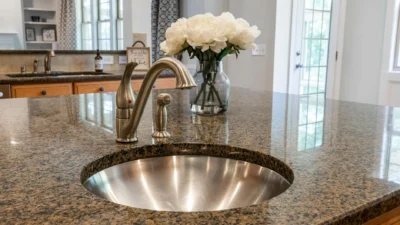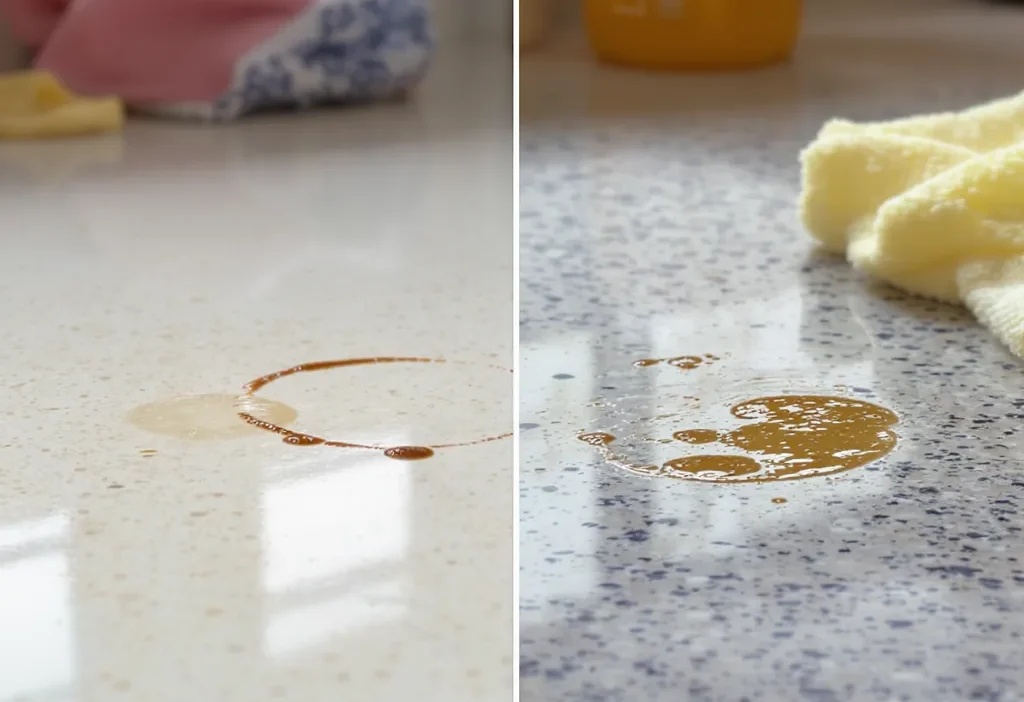
You set your favorite mug down for just a moment, only to lift it and find a dark, ominous ring staring back at you from your pristine countertop. That instant of panic—worrying you’ve permanently marred an expensive surface—is a universal kitchen moment. The crucial thing to know is that your next move depends entirely on what that surface is made of. Using the wrong method to remove coffee stains from a quartz countertop or tackle a tea stain on granite can turn a simple cleanup into a costly mistake. This guide cuts through the confusion, giving you a clear, material-specific path to safely erase those rings without a trace, so you can get back to enjoying your brew, not fearing it.
To safely remove coffee or tea stains, first identify your countertop material. For quartz, use a pH-neutral cleaner or mild dish soap. For sealed granite, a stone-safe cleaner or diluted isopropyl alcohol is effective. Avoid acidic or abrasive cleaners on both, as using the wrong product is the fastest way to cause etching or dulling that no amount of cleaning can fix.
Why Coffee and Tea Leave Rings (And Why It Matters)
That dark ring isn’t just spilled liquid—it’s a concentrated deposit of pigments and tannins. Coffee and tea contain strong colorants and organic compounds that, when left to evaporate, leave behind a visible stain. The key to countertop ring stain removal isn’t just scrubbing harder; it’s understanding how these compounds interact with your specific surface.
Granite is a natural, porous stone. Even when sealed, microscopic spaces can absorb liquids over time, allowing a tea stain on granite to seep in and become more stubborn. Quartz, on the other hand, is an engineered surface made of crushed stone bound with resin. It’s non-porous, so stains typically sit on the surface. However, the resin can be damaged by harsh chemicals, making the choice of cleaner critical for both materials. As the Marble Institute of America notes, using the wrong product on natural stone can cause permanent etching or discoloration.
Diagnosing Your Stain: Quartz vs. Granite
Before you grab any cleaner, confirm what you’re working with. A quick visual and physical check can save you from causing damage.
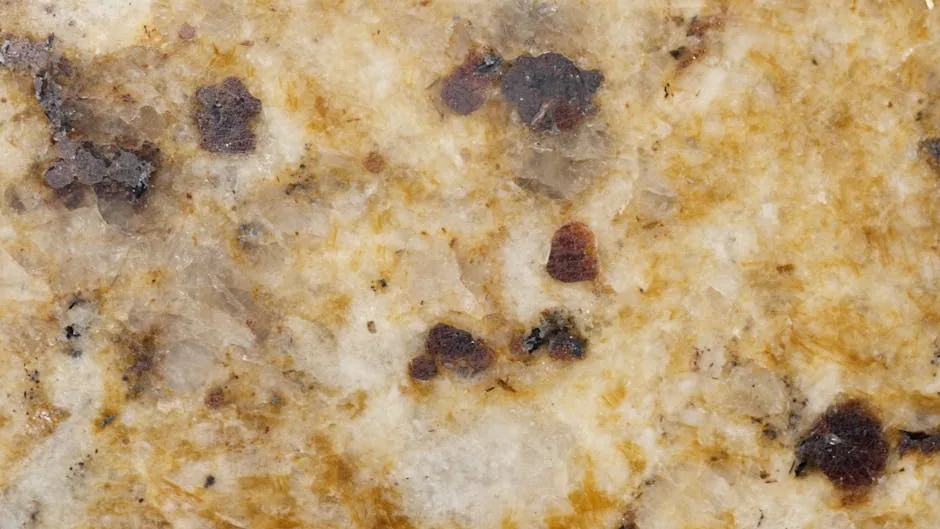
Photo by Artem Podrez on Pexels
Identify Your Countertop Material
Quartz typically has a more uniform, consistent pattern with very little variation. The surface feels smooth and cool, like glass. Granite has a speckled, crystalline, or veined pattern that is unique to each slab, and you can often feel the subtle texture of the minerals.
Assess the Stain Itself
For a fresh spill, the approach is similar: blot, don’t wipe. For a set-in ring, diagnosis is key. On quartz, a coffee ring is likely sitting on top. On granite, the stain may have penetrated. A simple water test can help: place a few drops of water on an inconspicuous area. If it darkens the stone quickly (within 1-2 minutes), your granite may need resealing, making it more susceptible to stains.
Remember: This is a general guide for common beverage stains. For severe, deep-set stains or damage, consulting a professional is the safest course of action.
The Right Cleaner for Quartz Countertops
Because quartz is non-porous but chemically sensitive, your goal is to lift the stain without degrading the resin surface. To safely remove coffee stains from a quartz countertop, you need gentle, pH-balanced solutions.
What TO Use (The Safe List)
- Mild Dish Soap & Warm Water: Your first and best line of defense. A few drops of soap in warm water, applied with a soft cloth, lifts most fresh rings.
- pH-Neutral Cleaner: Specifically formulated for quartz or stone surfaces. These are designed to clean without acidic or alkaline harshness.
- Rubbing Alcohol (Isopropyl Alcohol): For tougher stains, a 50/50 mix with water can be effective. Spray, let sit for a minute, then wipe clean.
What NOT to Use (The Danger List)
- Abrasive Pads or Powders: Steel wool or scouring powders can dull the glossy finish of quartz, creating scratches that attract more dirt.
- Acidic Cleaners: Vinegar, lemon juice, or bleach-based cleaners can break down the resin binder, causing cloudiness or “etching” that looks like a dull spot.
- Undiluted Alcohol or Acetone: These harsh solvents can damage the surface over time.
The method is straightforward: apply your safe cleaner, gently agitate with a soft sponge or cloth, rinse thoroughly with water, and dry with a microfiber towel to prevent water spots.
The Right Cleaner for Granite Countertops
Granite care revolves around preserving its sealant. A well-sealed granite surface resists stains, but the seal can wear down. Dealing with a tea stain granite countertop requires a cleaner that cleans without stripping this protective layer.
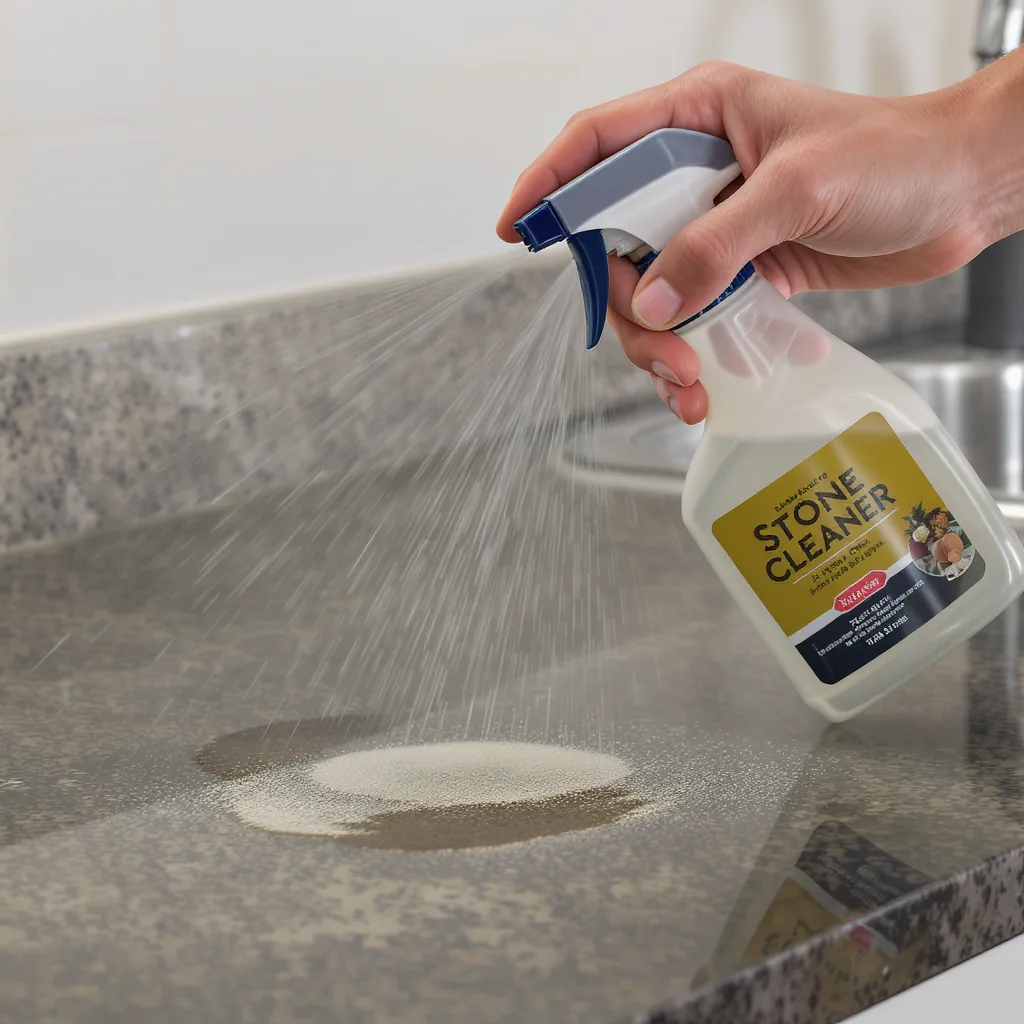
What TO Use (The Safe List)
- Stone-Specific Cleaner: These are pH-balanced for granite and marble. They clean effectively without harming the sealant.
- Diluted Isopropyl Alcohol: A mix of 70% isopropyl alcohol and 30% water works well for disinfecting and cutting through light organic stains.
- Dish Soap & Water (for daily cleaning): A mild solution is safe for quick clean-ups, but always rinse and dry to avoid soap film.
What NOT to Use (The Danger List)
- Vinegar, Lemon, or Any Acidic Cleaner: This is the golden rule for granite. Acids etch the surface, leaving permanent dull spots.
- Ammonia or Bleach-Based Cleaners: These can degrade the sealant over time, making the stone more porous and vulnerable.
- Generic All-Purpose Cleaners: Many are too acidic or alkaline for granite.
To treat a stain, spray your chosen cleaner, let it dwell for a few minutes to break down the residue, then wipe with a soft cloth. For persistent rings, you may need to repeat the process. If stains appear frequently, it’s a sign your granite needs to be resealed by a professional.
Your Clear Path to a Spotless Countertop
The panic of seeing a dark ring on your beautiful countertop is real, but the fix is straightforward once you know the rules. The single most important step is identifying your material—quartz or granite—and reaching for the cleaner that matches it. For quartz, think gentle and pH-neutral. For granite, think stone-safe and acid-free.
Your decisive next step? If you discover a fresh spill, gently blot it immediately with water and a soft cloth. Then, come back to the appropriate section above for a complete, safe clean. By using the right method from the start, you’ll preserve your investment and keep your kitchen looking pristine for years to come.