If you’re scrubbing your shower glass with more elbow grease and getting nowhere, you’re likely making the most common cleaning mistake. Hard water stains aren’t dirt; they’re a chemical problem—a crust of mineral deposits left behind when water evaporates. Using the wrong cleaner or a harsh scrub pad doesn’t dissolve this limescale; it can etch the glass or grind the minerals in deeper, making the cloudy film or white spots even more stubborn. The key to remove hard water stains from shower glass effectively isn’t about force, but about using the right chemistry and a method tailored to the severity of your mineral deposits shower door. This guide cuts through the frustration with a clear, troubleshooting approach that matches the solution to your specific problem, from a light haze to a heavy, chalky crust.
The best way to remove hard water stains from shower glass is to use a mild acid like white vinegar or citric acid, applied with a spray bottle and left to dwell. For light stains, a 50/50 vinegar-water solution works. For heavy, crusty deposits, use pure vinegar or a paste of baking soda and vinegar. Always test on a small area first and avoid abrasive scrubbers that can scratch the glass.
Why Hard Water Stains Are So Stubborn
To effectively tackle those cloudy spots on your shower door, it helps to understand what you’re fighting. Hard water contains high levels of dissolved minerals, primarily calcium and magnesium. When water evaporates on your glass, these minerals are left behind, forming a crusty, crystalline deposit that bonds directly to the surface.
This isn’t ordinary dirt or soap scum. It’s a chemical deposit, which is why scrubbing with just water or an all-purpose cleaner often fails. You need a solution that can break down the mineral bonds. Mild acids, like vinegar or citric acid, are perfect for this job because they react with the alkaline mineral deposits, dissolving them away without damaging the glass.
Photo by Burst on Pexels
Diagnose Your Stain: Light, Medium, or Heavy?
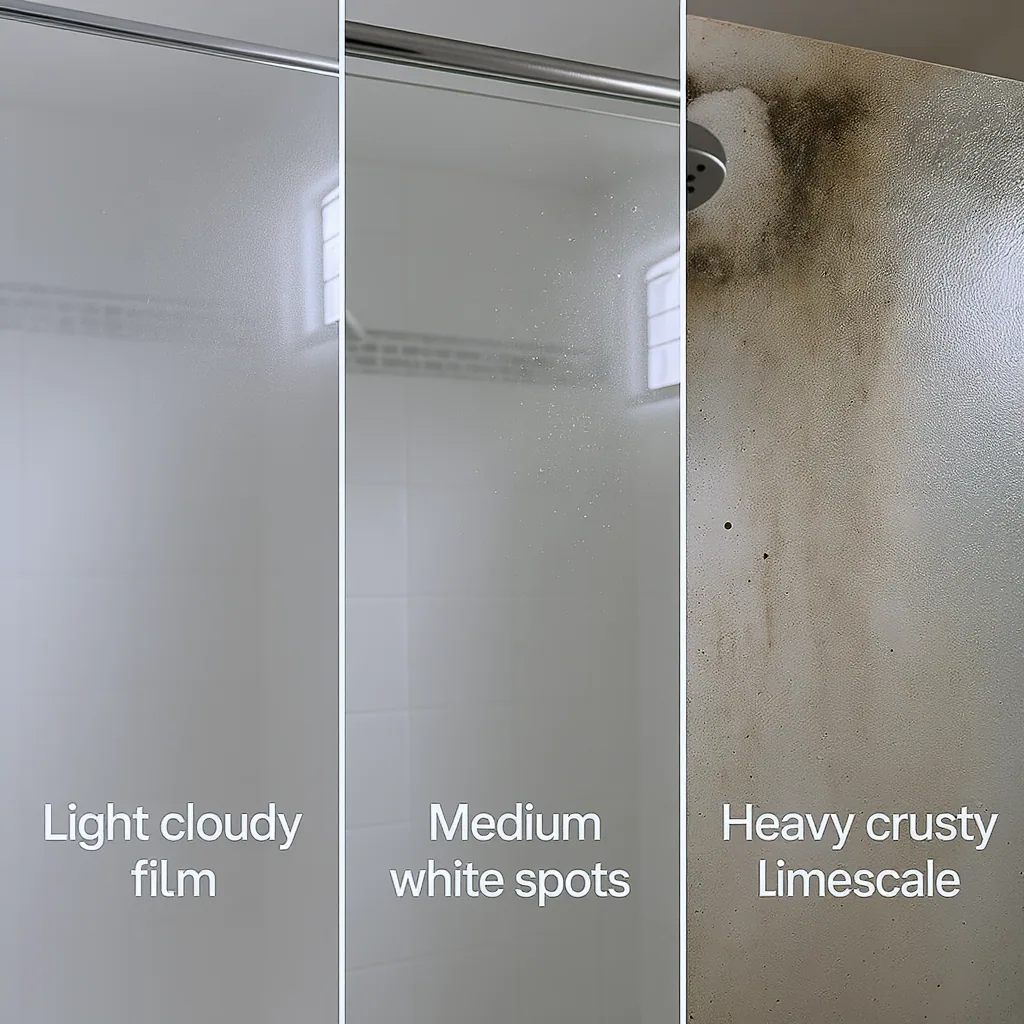
Before you grab a cleaner, take a close look at your shower glass. The best method depends entirely on the severity of the buildup. Here’s a simple guide to help you diagnose the problem.
Light Stains: The glass has a uniform, cloudy film or haze. You can wipe it with a damp cloth and see a temporary improvement, but the film quickly returns as the glass dries. The surface still feels mostly smooth.
Medium Stains: You can see distinct white spots, streaks, or rings. These water spots on glass shower enclosures are more defined and may feel slightly rough or gritty to the touch. Wiping with a cloth does little to remove them.
Heavy Stains: This is advanced, crusty limescale. The mineral deposits on the shower door are thick, chalky, and often have a rough, textured feel. They may appear white, off-white, or even slightly brownish. This level of buildup requires a more aggressive approach.
The Right Cleaning Protocol for Each Level
Match your cleaning effort to your diagnosis. Starting with a method that’s too weak is frustrating, but using a harsh method on light stains is unnecessary. Always ensure your bathroom is well-ventilated before you begin.
For Light, Cloudy Film
This is your easiest win. A simple vinegar solution can restore clarity quickly.
- Mix equal parts white vinegar and warm water in a spray bottle.
- Spray the solution generously onto the dry glass.
- Let it sit for 5-10 minutes to allow the acid to work on the mineral film.
- Wipe the glass clean with a non-abrasive microfiber cloth. Rinse with water if desired and dry with a squeegee or a second clean cloth.
For Medium, Visible White Spots
When spots are set in, they need more contact time with the cleaning agent.
- Use either pure white vinegar or a 50/50 vinegar-water mix in a spray bottle.
- Spray the affected areas. For vertical surfaces, a great trick is to soak paper towels in vinegar and press them directly onto the water spots on the glass shower door, covering the stains completely.
- Let the vinegar dwell for 30-60 minutes, keeping the paper towels wet if they start to dry.
- Remove the paper towels, scrub gently with a soft brush or non-scratch sponge, then rinse and dry thoroughly.
For Heavy, Crusty Buildup
Stubborn mineral deposits on the shower door need a concentrated attack. You have two excellent options.
Option 1: Vinegar and Baking Soda Paste (Note: This works as a gentle abrasive and creates a fizzing reaction that helps penetrate).
- Create a thick paste with baking soda and a small amount of white vinegar.
- Apply the paste directly to the crusty areas.
- Let it sit for 15-30 minutes.
- Scrub gently with a soft brush, then rinse completely. You may need to follow with a vinegar spray to dissolve any remaining residue.
Option 2: Commercial Limescale Remover. For the toughest jobs, a product specifically formulated for shower door limescale removal is very effective. Always follow the manufacturer’s instructions, apply in a ventilated area, and wear gloves.
Common Mistakes That Make Stains Worse
In your eagerness to get rid of hard water stains, it’s easy to reach for the wrong tool. Avoid these common pitfalls to protect your glass and get better results.
Don’t use abrasive scrub pads or steel wool. These will create tiny scratches in the glass, making it permanently dull and giving future mineral deposits more surface area to grip onto. Do instead: Use non-scratch sponges, microfiber cloths, or soft-bristled brushes.
Don’t use bleach-based cleaners. Bleach is great for mold and mildew but is chemically ineffective at dissolving calcium and magnesium deposits. You’ll waste effort and fumes. Do instead: Use an acid-based cleaner like vinegar, lemon juice, or a dedicated limescale remover.
Don’t spray and immediately wipe. The key to eliminating hard water spots is dwell time. If you don’t let the acidic solution sit and react with the minerals, you’re just moving them around. Do instead: Be patient. Let your cleaner work for at least 5-10 minutes, and much longer for set-in stains.
Don’t dilute your vinegar solution too much for heavy stains. While a 50/50 mix is great for maintenance, pure vinegar or a commercial concentrate is often needed to break through heavy crust. Starting too weak just means you’ll have to repeat the process.
Keeping Your Glass Spot-Free After Cleaning
Once you’ve successfully removed the hard water stains, a tiny bit of daily habit can prevent them from coming back with a vengeance. The goal is to stop mineral-laden water from drying on the glass.
The single most effective tool is a squeegee. After every shower, take 30 seconds to squeegee the water off the glass walls and door. This removes most of the water before it can evaporate and leave deposits behind.
For a hands-off approach, consider a daily shower spray. These sprays, often containing mild surfactants, help prevent mineral and soap buildup when used consistently. Simply spray on wet surfaces after your shower; no rinsing required.
For a more permanent solution, you can apply a hydrophobic glass sealant or rain-repellent product (the kind used on car windshields) to your shower glass. This creates an invisible barrier that causes water to bead up and roll off, making drying faster and leaving fewer spots. Reapply every few months as directed.
Ultimately, if you live in an area with very hard water, addressing the source with a whole-house or showerhead water softener is the most comprehensive way to solve the problem for all your fixtures, not just your clean glass shower doors.
Your Clear Glass Awaits
The battle against hard water stains isn’t won with brute force, but with the right chemistry. Remember, the core principle is using a mild acid—like vinegar—and giving it enough time to dissolve the mineral bonds. Your success hinges on correctly diagnosing whether you’re dealing with a light film, medium spots, or heavy crust, then applying the corresponding protocol.
Stop letting cloudy glass ruin your shower experience. Start by diagnosing your stains tonight, gather your simple supplies, and apply the method that matches. With a little targeted effort, you can restore that sparkling clarity and keep it that way with simple, consistent habits.