You know the moment. You climb into your car after a muddy trail run or a slushy winter commute, and there it is: the gritty, damp evidence of your adventure caked onto the floor mats. That initial sigh of resignation is often followed by a critical mistake—putting off the cleanup until “later.” When it comes to effectively clean mud stains from car mats or tackle crystalline salt residue, timing isn’t just a suggestion; it’s the entire game. A fresh spill is a simple five-minute wipe-up. Left to dry, that same mud bonds into a concrete-like crust, and salt begins its corrosive work, turning a chore into a battle. This isn’t just about cleaning; it’s about understanding the two distinct states of a stain and having the right protocol for each. Consider this your practical playbook for winning both fights.
To clean mud and salt stains from car mats, your success depends entirely on timing. For fresh stains, immediate blotting and a damp cloth often suffice. For dried, hardened mud and salt crust, you must first rehydrate the stain with a cleaning solution before gently scrubbing to avoid damaging the mat fibers. Always check your mat material first, as rubber and carpet require slightly different approaches to moisture and agitation.
Why Timing is Your Secret Weapon: Fresh vs. Dried Stains
Think of a fresh mud stain as wet dirt and a fresh salt stain as loose crystals. At this stage, they’re just sitting on the surface of your mat’s fibers. Mud is water-soluble, and salt hasn’t yet begun its corrosive bonding process. This is the golden hour for vehicle floor mat stain removal—minimal effort yields maximum results.
Let that mess dry, however, and the game changes completely. Mud hardens into a concrete-like crust, mechanically bonding to the carpet loops or rubber grooves. Dried salt doesn’t just sit there; it pulls moisture from the air and the mat itself, creating a corrosive brine that can stain and even degrade fabric backing over time. This is why the approach to clean dried salt stains from your car is fundamentally different from tackling a fresh spill. Understanding this “state of the stain” is the single most important factor for a successful cleanup.
Photo by Jarne Aerts on Pexels
The Fresh Stain Protocol: Act Fast, Save Effort
You’ve just tracked it in. Don’t wait. This simple, immediate action plan can prevent a minor mess from becoming a major chore.
For Fresh Mud Stains:
- Blot, Don’t Rub: Use a dry paper towel or old cloth to gently blot up as much of the wet mud as possible. Rubbing will grind the dirt deeper into the fibers.
- Vacuum the Residue: Once the bulk is blotted, use a vacuum cleaner (a handheld or your car’s attachment works perfectly) to suck up any loose, dry dirt that remains.
- Damp Wipe & Dry: Dampen a clean microfiber cloth with plain water. Wipe the area clean. Follow immediately with a dry towel to absorb all moisture. For rubber mats, you can often rinse them right off with a hose.
For Fresh Salt Stains (or Melting Slush):
- Vacuum First: Get rid of any loose salt crystals or dry debris before they dissolve.
- Damp Wipe Thoroughly: Salt is highly soluble. A cloth dampened with plain water is usually all you need to dissolve and wipe away the residue. For carpet mats, you may need to make a few passes with a clean section of the cloth.
- Dry Completely: This is critical. Any leftover moisture can lead to mildew or allow residual salt to re-crystallize. Wipe the area dry with a towel and, if possible, let the mat air out before reinstalling.
The Dried Stain Protocol: The Gentle Battle Plan
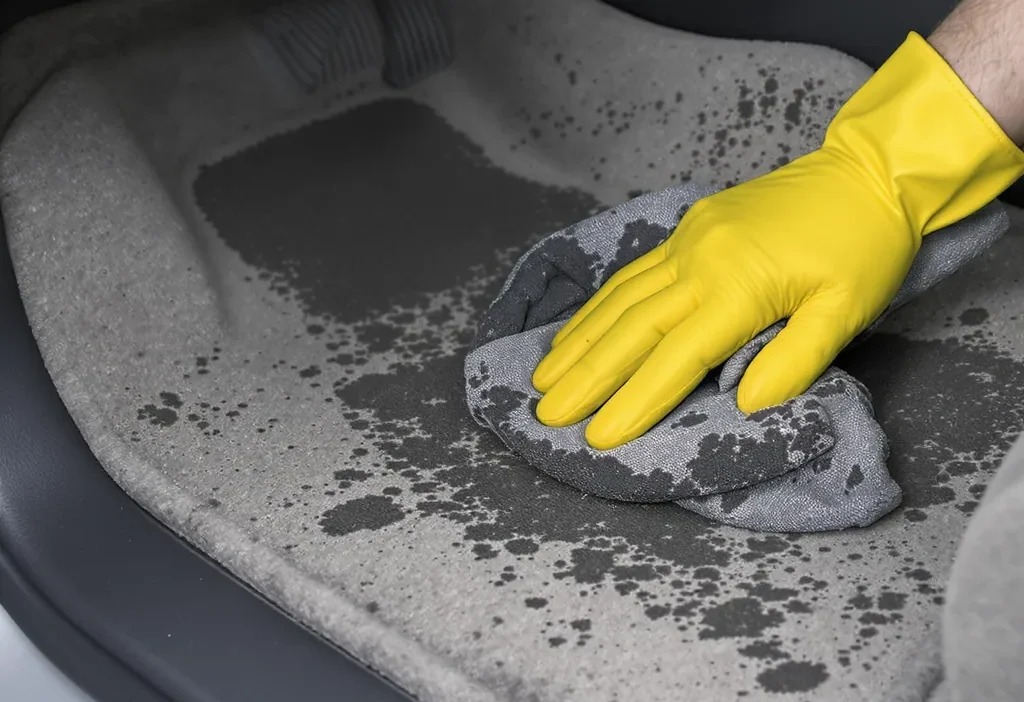
When you’re facing a hardened, crusty mess, patience and the right technique are key. Aggressive scrubbing will only fray carpet fibers or scratch rubber. Follow this phased battle plan instead.
Photo by Lucas Pezeta on Pexels
Phase 1: Remove Loose Debris
Take the mat out of the car. Give it a firm shake or tap it against a hard surface outdoors to dislodge any dried clumps. Follow up with a thorough vacuuming on both sides.
Phase 2: Rehydrate and Loosen
This is the crucial step for salt stains on car carpet mats and dried mud alike. Create a simple cleaning solution: a few drops of mild dish soap or dedicated carpet cleaner in a spray bottle filled with warm water. For stubborn salt stains, a 50/50 mix of white vinegar and water is excellent for breaking down mineral deposits. Liberally spray the stained area until it is damp, not soaking. Let it sit for 5-10 minutes to soften the bond.
Phase 3: Gently Agitate
Using a soft-bristled brush (a detailing brush or even a soft toothbrush) or a folded microfiber cloth, gently agitate the stained area in a circular motion. The goal is to lift the stain, not shred the mat.
Phase 4: Extract and Rinse
Blot up the dirty solution with a dry, absorbent towel. For rubber mats, you can now rinse them clean with a hose or in a utility sink. For carpet mats, use a damp cloth with clean water to “rinse” the area by blotting, removing any soapy residue.
Phase 5: Dry Thoroughly
This cannot be overstated. Wring out excess water and prop the mat up vertically or hang it to air dry completely in a well-ventilated area. Never put a damp mat back in your car.
Material Matters: Rubber vs. Carpet Mat Nuances
Your strategy should adapt slightly based on what your mats are made of. Here’s a quick guide to the do’s and don’ts for each.
For Rubber/All-Weather Mats:
- DO: Hose them off freely. Use a stiff brush for scrubbing without worry. Let them air dry in the sun.
- DON’T: Use overly harsh chemicals or abrasive pads that can cause fading or micro-scratches.
For Carpet Mats:
- DO: Use a soft brush and blotting motions. Prioritize drying to prevent mildew. Test any cleaner in an inconspicuous spot first.
- DON’T: Soak them or use excessive water, as it can seep into the backing and cause odors. Avoid stiff brushes that will “pill” or fuzz the carpet fibers.
Common Mistakes to Avoid
Even with the best intentions, a few missteps can make the problem worse or damage your mats.
- Drowning Carpet Mats: Soaking them leads to a musty smell and potential mold growth under the floor. Use moisture sparingly and extract it thoroughly.
- Scrubbing Dried Stains Aggressively: This is the fastest way to fray and permanently damage carpet fibers. Always rehydrate first.
- Using Harsh Chemicals: Bleach, strong degreasers, or ammonia-based cleaners can discolor or break down the materials of both rubber and carpet mats. Stick to mild soaps or dedicated automotive cleaners.
- Reinstalling Damp Mats: Trapping moisture against your car’s floor is an invitation for rust and mildew. Ensure mats are bone-dry before putting them back.
Keep Your Floors Cleaner, Longer
The core rule is simple: tackle mud and salt fast when they’re fresh, and approach dried stains with a gentle, rehydrating strategy. But the real win is preventing the battle altogether. Investing in a set of heavy-duty all-weather floor liners for the messy seasons is one of the best upgrades for any car interior. For daily maintenance, keep a microfiber towel in your door pocket for quick wipe-ups after rainy or snowy trips, and get in the habit of giving your mats a good shake every time you fill up for gas. With this knowledge and a few simple habits, car mat stain removal becomes a quick, manageable task instead of a dreaded chore.