You watch the dark splash hit your shirt and think, “I’ll deal with that in a minute.” That’s the exact moment you lose. The common belief is that a coffee stain is only ruined once it dries, but the real, shirt-killing mistake happens in the first 60 seconds. That brief window is governed by simple chemistry: the liquid is pulled deep into the cotton fibers by capillary action, and the proteins and tannins in the coffee begin bonding with the fabric. This article cuts through the myths to give you a clear, binary strategy. Whether you’re staring at a wet spill or a week-old ghost ring on your collar, the power to remove coffee stains from a shirt comes down to recognizing which scenario you’re in—fresh or set-in—and executing the correct, immediate protocol.
To remove a coffee stain from a shirt, your approach depends entirely on timing. For a fresh spill, immediately blot and rinse with cold water, then apply liquid detergent. For a set-in stain, you must pre-treat with a solution like white vinegar or an enzyme cleaner before washing. Never put the garment in the dryer until the stain is completely gone.
The 60-Second Myth: Why ‘Fresh’ Isn’t What You Think
You spill coffee on your shirt and think, “I’ll deal with it when I get home.” That’s the first mistake. The common belief that you have a generous window to tackle a fresh spill is a myth that leads directly to a set-in coffee stain removal nightmare. The true “fresh” window is shockingly short—often just the first 60 seconds.
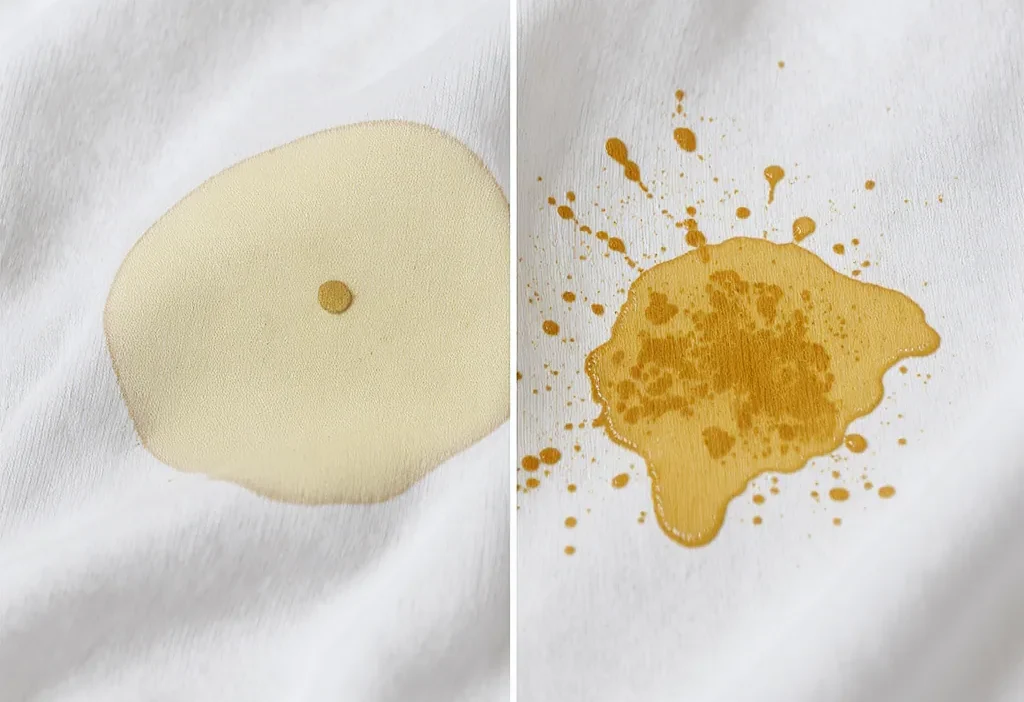
Why? It’s all about capillary action. A coffee stain on a cotton shirt isn’t just sitting on the surface. The moment hot liquid hits the fabric, it’s pulled deep into the tiny spaces between the fibers. As it dries, the tannins and oils in the coffee bind to the cotton, creating a chemical bond that simple rinsing can’t break. This process starts immediately. Thinking you have “plenty of time” is what turns a simple clean coffee spill from clothing into a permanent mark.
Your Protocol for a Fresh Coffee Spill (Right Now)
When coffee hits your shirt, your goal is to act before capillary action wins. This isn’t about complex chemistry; it’s about a swift, mechanical removal. Follow this protocol the instant the spill happens.
Step 1: Blot, Don’t Rub
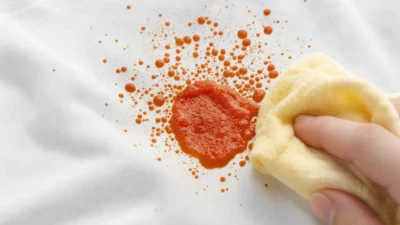
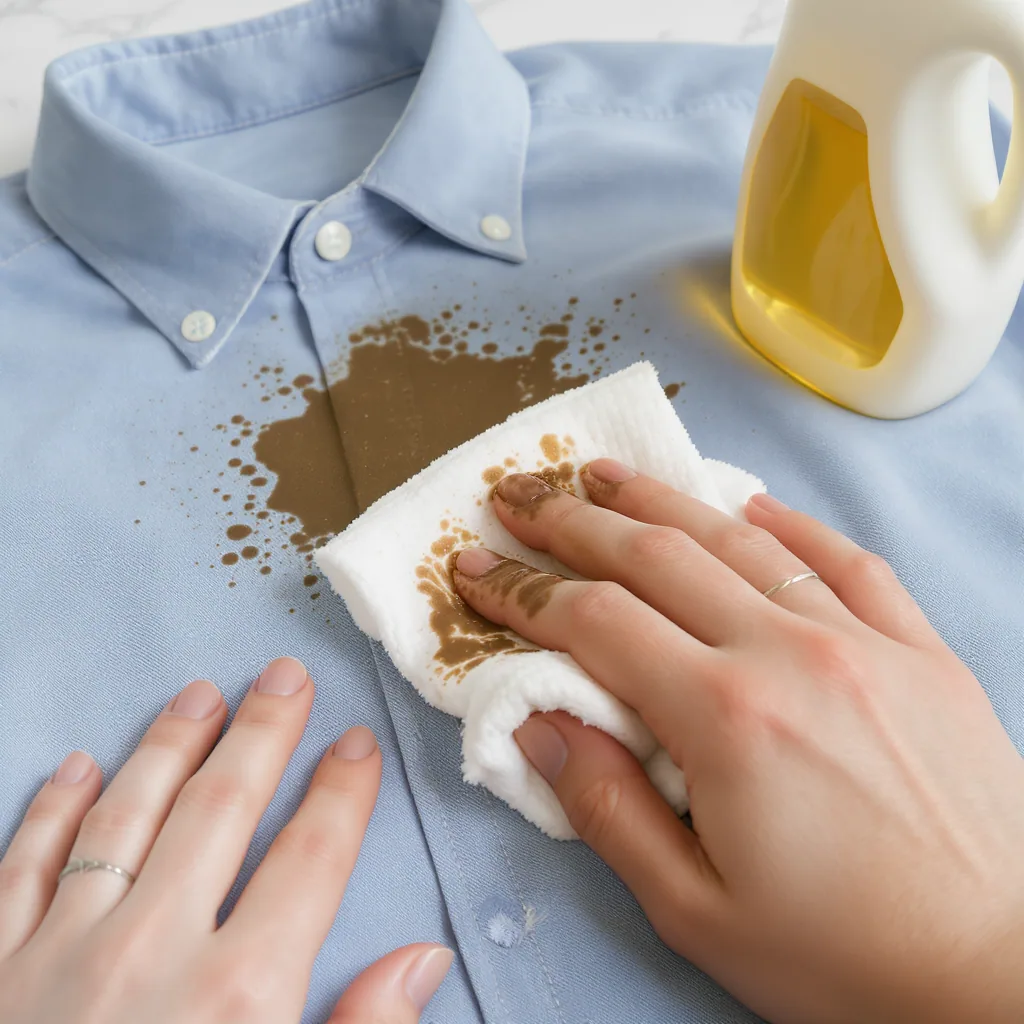
Immediately grab a clean, absorbent cloth or paper towel. Place it over the stain and press down firmly to soak up as much liquid as possible. Rubbing is the enemy—it grinds the coffee particles deeper into the fabric and spreads the stain.
Step 2: The Cold Water Flush
Hold the stained area under a cold tap, from the backside of the fabric if possible. This pushes the stain out the way it came in, rather than driving it through. Use a strong stream of water. Remember: cold water only. Hot water can set proteins and tannins, making the stain permanent.
Step 3: Apply Liquid Detergent
While the fabric is still wet, apply a small amount of clear liquid laundry detergent directly to the stain. Gently work it into the fibers with your fingers or the edge of the bottle. Let it sit for at least 5 minutes to break down the oils.
Step 4: The Pre-Wash Check
Before you even think about the dryer, wash the shirt as usual—but with cold water. After the wash cycle, inspect the stain under good light. If any trace remains, do not dry it. Repeat the treatment. Only when the stain is completely gone should the shirt see heat.
Rescuing the ‘Lost Cause’: Set-In Stain Removal
So the stain dried. Maybe you even washed and dried it, baking it in. All is not lost. The strategy now shifts from simple flushing to actively breaking down the stain compounds that have bonded with the fabric. This is a salvage mission, and patience is your new best tool.
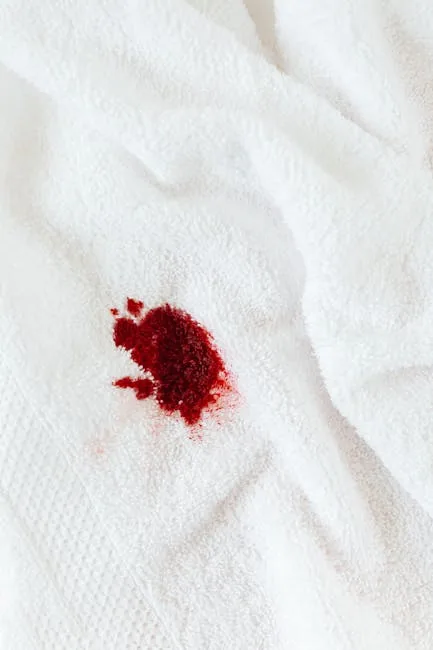
Photo by www.kaboompics.com on Pexels
Option 1: The White Vinegar Soak
White vinegar is a mild acid that can help break down the set-in stain. Mix one part white vinegar with two parts cold water in a bowl or sink. Submerge the stained area and let it soak for 30 minutes to an hour. After soaking, gently rub the fabric together to agitate the stain, then rinse thoroughly with cold water.
Option 2: Enzyme-Based Stain Remover
For a set-in coffee stain removal challenge, a commercial enzyme cleaner is often the most effective weapon. These products contain proteins that literally digest organic stains. Apply the remover directly to the dry stain, following the product’s instructions carefully—usually involving letting it sit for 10-15 minutes before washing.
Option 3: The Baking Soda Paste (For Delicate Fabrics)
For a gentler approach, make a thick paste of baking soda and a little water. Spread it over the stain and let it sit for an hour. The baking soda acts as a gentle abrasive and odor neutralizer. Brush it off and rinse the area with cold water before washing.
Whichever method you choose, the final, non-negotiable step is to wash the garment in cold water and air-dry it until you confirm the stain is gone. Heat is the final seal on a set-in stain.
The Mistakes That Make Stains Permanent
Often, it’s not the coffee itself that ruins the shirt, but our well-intentioned reactions. Avoid these common errors to drastically increase your success rate when you try to get coffee out of a shirt.
Using Hot Water: It feels logical—hot water cleans better, right? Not for organic stains like coffee. Hot water can cook the proteins and set the tannins, essentially gluing the stain to the cotton fibers. Always start with cold.
Rubbing Vigorously: The instinct to scrub at the spill spreads the liquid over a wider area and forces it deeper into the fabric weave. Blotting is a lifting action; rubbing is a grinding one.
Applying Heat Before Checking: Tossing the shirt into the dryer “just to see” is the point of no return. The dryer’s intense heat will permanently set any residual stain. Always air-dry until you’ve verified the stain is 100% gone.
Using Bar Soap or Dish Soap Incorrectly: While dish soap can break down oils, it must be rinsed out completely before washing, or it can leave its own residue. Bar soaps often contain fats or moisturizers that can leave a ring.
Giving Up After One Wash: Set-in stains often require multiple treatment cycles. If you see a faint shadow after the first wash, re-treat it. Persistence is key for old coffee stain removal.
Your Clear Path Forward
The next time coffee threatens your favorite shirt, you’re no longer at the mercy of guesswork. You have a clear, binary choice based on a simple diagnosis: Is the stain wet or dry? If it’s wet, execute the fresh-spill protocol immediately—blot, flush, treat. If it’s dry, you switch to the salvage plan with a pre-treatment soak. The real power isn’t in a magic product; it’s in recognizing which scenario you’re facing and acting accordingly. Your shirt’s fate is now firmly in your hands.