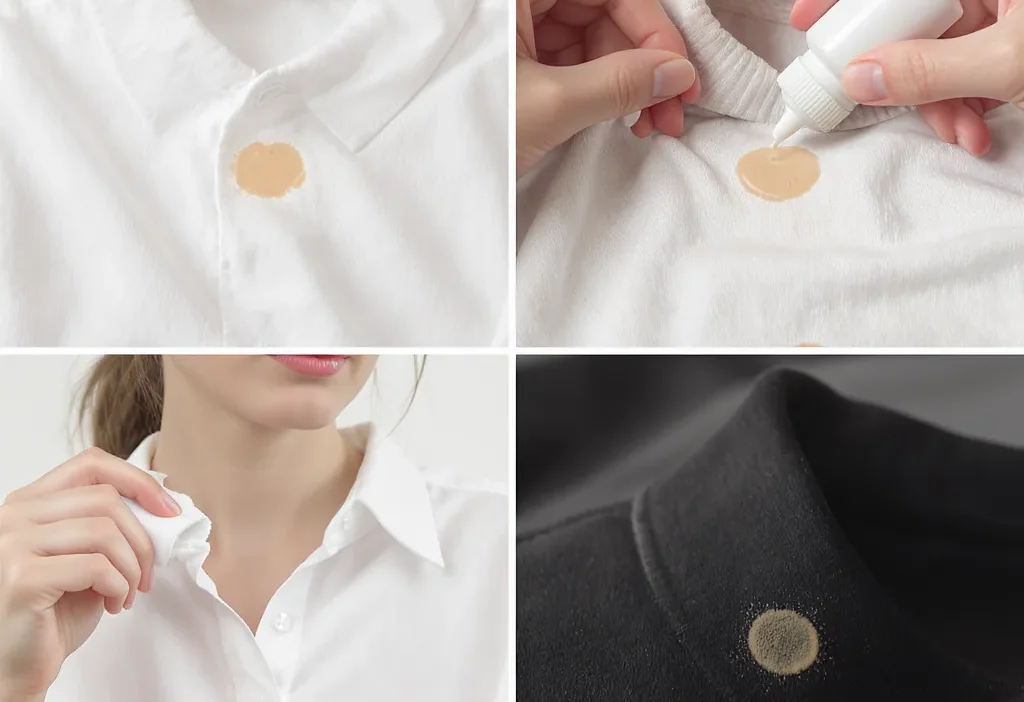
You’re rushing out the door, lean in for a hug, and—oops—a swipe of foundation is now a permanent-looking guest on your favorite shirt. We’ve all been there. That sinking feeling is real, but the good news is, most makeup stains are not a death sentence for your clothes. The secret to successfully removing foundation stains from clothes isn’t a single magic potion; it’s a fabric-specific protocol. The critical first move and the products you reach for depend entirely on whether that shirt is a light linen blouse or a dark wool blazer. Acting fast is key, but acting smart—based on color and fabric type—is what truly saves the day. This guide cuts through the clutter to give you clear, actionable steps for both scenarios, so you can tackle that concealer stain on your collar or that foundation smudge on your sleeve with confidence.
To remove a fresh foundation stain, first blot—don’t rub—the excess. For light fabrics, a dab of liquid laundry detergent often works. For dark or delicate fabrics, a gentler approach with diluted dish soap helps lift the stain without damaging the color. The core principle is to match your treatment to the fabric’s color and delicacy to avoid setting the stain or causing fading.
The First 60 Seconds: Your Critical Blot-and-Assess Protocol
The moment you see that smear, your immediate reaction determines everything. Panic-rubbing is the enemy—it grinds the oily, pigmented makeup deeper into the fibers, making the stain larger and more permanent. Your first move is always to grab a clean paper towel, cloth, or even a cotton pad and gently blot the area to lift away any excess, unset product. gently blot the area
Next, take a breath and assess two things: the fabric type (check the care label) and, crucially, its color. This is your decision point. The approach to remove foundation stains from clothes on a white cotton tee is fundamentally different from the one you’d use on a black silk blouse. The goal for light fabrics is aggressive stain lifting; for dark or delicate ones, it’s gentle lifting without damaging the dye or fibers. Acting within this first minute gives you the highest chance of a full recovery.
Photo by www.kaboompics.com on Pexels
Protocol for Light-Colored Fabrics (Cotton, Linen, White Blouses)
On light fabrics, the stain is the star of the show, so you can use more potent cleaners without fear of causing visible light spots. Your best friend here is a clear, liquid laundry detergent or a dedicated makeup stain remover for fabric. The enzymes and surfactants in these products are designed to break down oils and pigments.
Here’s your playbook: After blotting, apply a small dab of liquid detergent directly to the back of the stain. Gently work it in with your fingers or a soft-bristled toothbrush, pushing the stain out from the reverse side. Let it sit for 5-10 minutes. Then, rinse thoroughly from the back with cold water, watching the makeup wash away. For stubborn spots, you can make a paste of detergent and water, apply it, and let it sit a bit longer before rinsing and laundering as usual. A quick test on an inner seam is wise if you’re using a new or strong makeup stain remover.
Photo by www.kaboompics.com on Pexels
Protocol for Dark or Delicate Fabrics (Black Denim, Silk, Wool Blends)
This is where you switch to a gentle, surgeon’s touch. Harsh detergents or vigorous scrubbing can fade the rich dye on dark fabrics or damage delicate fibers like silk. Instead, think of using tools already in your beauty arsenal. A micellar water-soaked cotton pad or even a gentle makeup remover wipe can be surprisingly effective for a fresh concealer stain on a collar.
Your gentler protocol: After blotting, mix a drop of clear dish soap (like Dawn) with a few drops of water to dilute it. Using a clean cloth, dab this solution onto the stain, always blotting—never rubbing—from the outside in to prevent spreading. Rinse with a damp cloth and cold water. For silks or wools, a specialized delicate fabric wash is a safer bet. The key is patience; you may need to repeat the dabbing and rinsing process a few times to fully clean foundation from fabric without harming it.
Dos, Don’ts, and What to Do If It’s Already Set
Even with the best protocol, mistakes happen. Here’s a quick guide to keep you on track and a plan for when you find a days-old stain.
The Essential Dos and Don’ts
Do: Act with speed. Blot, don’t rub. Use cold water to rinse. Check the garment’s care label before starting.
Don’t: Rub the stain—it’s a spreading machine. Use hot water, as it can set the oils in the makeup permanently. Apply harsh chemicals like bleach or undiluted vinegar to delicate or dark fabrics.
Salvaging a Set-In Stain
If the stain has dried or been through the dryer, all is not lost, but it requires more effort. Start by gently scraping off any crusted product. Then, pre-treat the area with a heavy-duty liquid detergent or an enzyme-based pre-soak (like one for baby stains). Work it in, let it soak for several hours or overnight, then wash normally with the hottest water the fabric allows. For expensive or sentimental items, taking them to a professional cleaner is often the wisest investment to get makeup out of fabric safely.
Keep Calm and Carry a Stain Pen
Foundation and concealer marks are a common nuisance, but they’re rarely a death sentence for your clothes. The real secret is remembering that fabric color dictates your strategy. By pausing to assess and using the right, gentle technique for the job, you can tackle most fresh accidents successfully.
The ultimate hack for next time? Stash a portable stain remover pen in your bag or desk. It’s the fastest way to treat makeup stains on the go, acting as your instant blot-and-treat kit before the stain has a chance to set. With the right protocol in your back pocket, you can face the day—and your makeup routine—with a lot more confidence.