You’ve scrubbed, sprayed, and aired out the cushions. For a few days, maybe even a week, you think you’ve won. Then, on a humid afternoon or as you sink into the couch, that faint, unmistakable scent returns. It’s a uniquely frustrating moment for any pet owner—the realization that your attempt to remove a pet urine stain from the couch was only a temporary fix. This cycle of hope and disappointment happens because most cleaning methods only address the surface, leaving the root cause untouched deep within the cushion layers. Understanding this “why” is the key to a permanent solution. This guide cuts through the frustration, explaining the simple science behind why pet accident odors return and walking you through safer, more effective methods that actually work.
To permanently remove a pet urine stain and odor from couch cushions, you need an enzymatic cleaner that breaks down the uric acid crystals at the source. Surface cleaning alone will fail, as these crystals rehydrate and release odor over time. The effective process involves thoroughly saturating the affected area with the enzyme solution, allowing it to dwell for several hours to digest the odor-causing compounds, and then ensuring the cushion dries completely to prevent mold and residual smell.
Why Pet Urine Odor Keeps Coming Back
You’ve scrubbed the spot, maybe even used a carpet cleaner, and for a few days, everything seems fine. Then, on a humid afternoon or when you plop down on the cushion, that unmistakable smell returns. This isn’t a sign of a bad cleaning job; it’s the predictable result of how pet urine interacts with your couch’s complex layers.
The core issue is uric acid. When urine dries, it leaves behind microscopic uric acid crystals that are insoluble in water. These crystals are odorless when dry. The problem starts when they encounter moisture again—from humidity, a spill, or even the natural moisture in the air when you sit down. They rehydrate, reactivating the bacteria and releasing that familiar ammonia smell all over again.
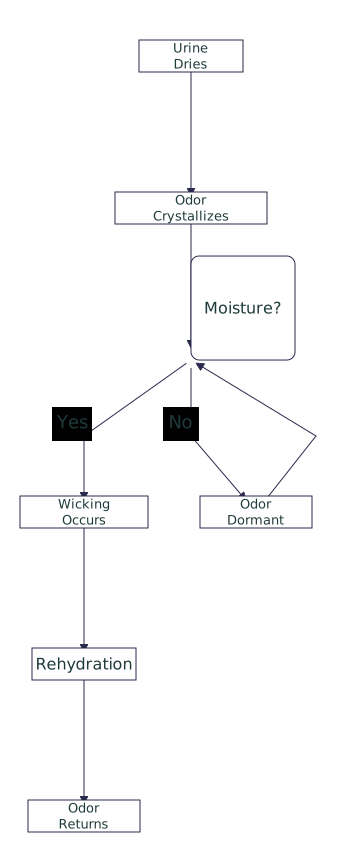
Furthermore, liquid doesn’t just sit on the surface. It wicks down through the fabric, into the cushion padding, and can even reach the foam core. Surface cleaning addresses only the top layer, leaving a reservoir of crystals and bacteria deep within. This is why a simple couch odor stain removal attempt with soap and water often fails. You’re only treating the symptom, not the source buried in the upholstery.
The Safer Cleaning Toolkit: What You Actually Need
Effective upholstery pet accident cleaning requires the right tools. Using the wrong ones can chemically set the stain or drive the urine deeper, guaranteeing the odor’s return. Here’s what to gather before you start.
The “Do” List: Your Essential Arsenal
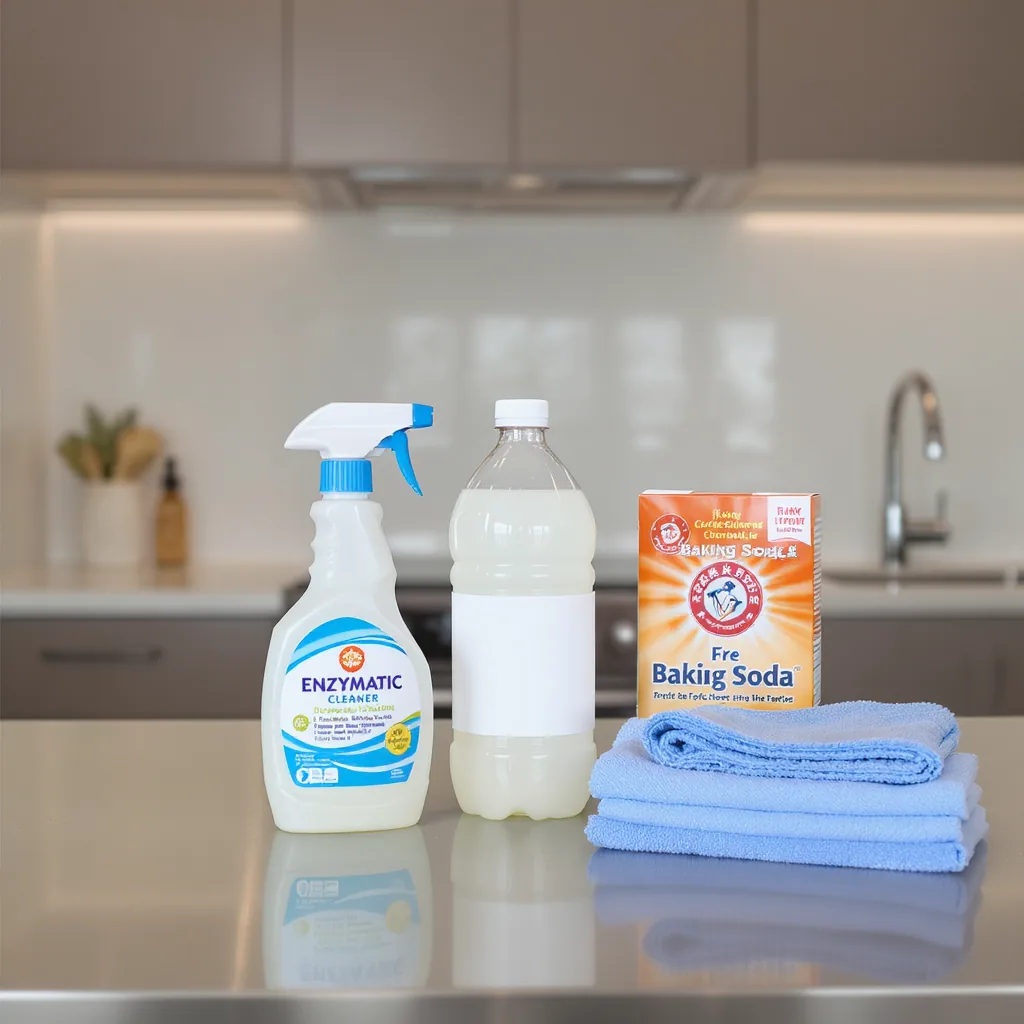
Enzymatic Cleaner: This is non-negotiable. These cleaners contain live bacteria or enzymes that biologically “eat” the uric acid crystals and organic matter, eliminating the odor at its source. Look for one specifically labeled for pet urine.
White Vinegar Solution: A mix of equal parts white vinegar and cool water is a fantastic, safe rinsing agent after the enzymatic treatment. Vinegar is a mild acid that helps neutralize residual ammonia and break down some salts, plus it’s a natural deodorizer.
Absorbent Microfiber Cloths or Towels: You’ll need plenty of these for blotting—never scrubbing—at every stage. Microfiber is excellent for pulling moisture up and out of the fabric.
Baking Soda: Useful as a final, passive deodorizer only after the area is completely dry. It can help absorb any lingering atmospheric odors.
The “Don’t” List: What to Avoid at All Costs
Ammonia-Based Cleaners: Ammonia is a component of urine. Using it can confuse your pet, making the spot more attractive for a repeat accident, and it won’t break down the uric acid.
Steam Cleaners or Hot Water: Heat can permanently set the protein in urine (like cooking an egg white into the fabric) and can drive the urine deeper into the cushion foam, making the problem worse.
Harsh Chemicals like Bleach: These can discolor your upholstery and often only mask the smell temporarily without addressing the underlying crystals. They can also create dangerous fumes when mixed with other cleaners.
Step-by-Step Guide to Permanently Remove the Stain & Odor
This method focuses on reaching and neutralizing the uric acid crystals deep within the cushion. Patience is your most important tool here. Rushing will lead to the odor returning.
Step 1: Immediate Blotting
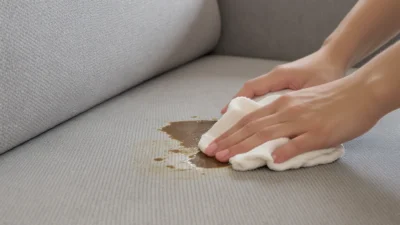
If the accident is fresh, act quickly. Use a stack of clean, dry microfiber cloths or paper towels to blot, applying firm, downward pressure to soak up as much liquid as possible. Change cloths as they become saturated. Do not rub, as this spreads the urine and pushes it deeper.
Step 2: Apply Enzymatic Cleaner Liberally
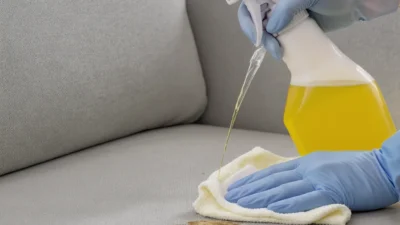
Following the product’s instructions, saturate the stained area thoroughly. You need enough solution to penetrate through the fabric and into the cushion padding below. The goal is to remove pet urine stain from couch layers you can’t see. Don’t be shy—the cushion needs to be dampened where the urine traveled.
Step 3: The Critical Dwell Time
This is where most people fail. Let the enzymatic cleaner sit for the full time listed on the bottle—often several hours or even overnight. The enzymes need time to work. Cover the area with plastic wrap to keep it moist if needed. This extended contact is what allows the bacteria to break down the odor-causing crystals.
Step 4: Rinse and Neutralize
After the dwell time, blot up any excess cleaner. Then, lightly mist the area with your white vinegar and water solution and blot again. This step rinses out the enzymes and any residual waste, helping to prevent any sticky residue and further deodorize.
Step 5: Absorb All Moisture
Use dry towels to blot the area as dry as possible. You can stand on the towel (with clean feet or shoes) to apply even pressure and squeeze moisture out of the cushion into the towel.
Step 6: Dry Completely
This is the final, crucial step. Incomplete drying can lead to mildew. Use fans to circulate air over the cushion. If possible and if the care tag allows, take the cushion outside in direct sunlight; UV light is a great natural deodorizer and dryer. Ensure the cushion is bone-dry before putting it back in use, which may take 24 hours or more.
Common Mistakes That Lock In the Odor
Understanding what not to do is just as important as following the right steps. These common errors directly undermine your efforts and are often the reason a smell persists.
Using Hot Water or Steam: As mentioned, heat sets proteins. Think of it as baking the urine into the fabric fibers. Once set, the stain and odor become nearly impossible to remove without professional-grade equipment.
Skipping the Enzymatic Cleaner: Relying on general-purpose cleaners, odor masks, or scented sprays only covers up the problem. They don’t address the uric acid crystals, so the odor inevitably returns.
Not Allowing Enough Dwell Time: Spraying an enzyme cleaner and blotting it up 10 minutes later is useless. The biological process needs hours to complete. Impatience here guarantees failure.
Forgetting to Rinse: Leaving enzymatic cleaner residue in the fabric can sometimes leave a faint, unpleasant smell of its own. A quick vinegar-water rinse clears this out.
Sealing in Moisture: Putting a cushion cover or blanket back on a damp cushion traps moisture, creating a perfect environment for mildew and allowing rehydrated crystals to keep smelling. Always confirm the cushion is 100% dry.
A Little Patience for a Lasting Freshness
Dealing with pet accidents on furniture is a test of patience. The quick fix—a hasty scrub with whatever cleaner is under the sink—offers immediate hope but long-term disappointment as the odor resurfaces. The enzymatic method requires more time and deliberate effort upfront: waiting for the cleaner to work, thoroughly rinsing, and ensuring complete drying.
However, this tradeoff is worth it. Investing a few hours of process over a few minutes of frantic cleaning is the only reliable way to eliminate pet odor from upholstery for good. By understanding the science and following the safer steps, you can reclaim your couch, save money on repeated cleaning attempts, and enjoy a truly fresh living space alongside your pet.