You settle into your favorite patio chair, ready to relax, and feel it—a stubborn, sticky patch on the cushion. That amber blob of tree sap wasn’t there yesterday, but a windy afternoon has left its mark. Your immediate instinct might be to scrub it away, but that’s a fast track to ruining expensive outdoor fabrics. The frustration is real, but so is the solution. Successfully removing tree sap from outdoor fabric isn’t about one magic trick; it’s about a smart, fabric-specific protocol. Using the wrong cleaner on your Sunbrella umbrella or olefin cushion can set a stain permanently or damage the material’s protective coating. This guide cuts through the guesswork, providing a clear playbook to tackle sap stains on patio cushions and umbrellas by first identifying your fabric type, then applying the safest, most effective method.
The key to removing tree sap from patio cushions and umbrellas is to first identify the fabric type, as methods safe for solution-dyed acrylic (like Sunbrella) can harm others. For most outdoor fabrics, applying isopropyl alcohol (70%) with a soft cloth will dissolve the sap without damaging the material. Always perform a spot test in an inconspicuous area first, and never scrub aggressively, as this can grind the sap deeper into the fibers.
First, Identify Your Outdoor Fabric Type
Before you touch any cleaning product, you must know what you’re cleaning. The single most important step to safely remove tree sap from outdoor fabric is identifying the material. Using the wrong method on the wrong fabric can permanently fade, weaken, or damage it.
Start by checking for a fabric care tag. On patio cushions, look underneath the cushion cover or along a seam. For umbrellas, check the underside of the canopy near the center pole or on the valance. This tag is your definitive guide.
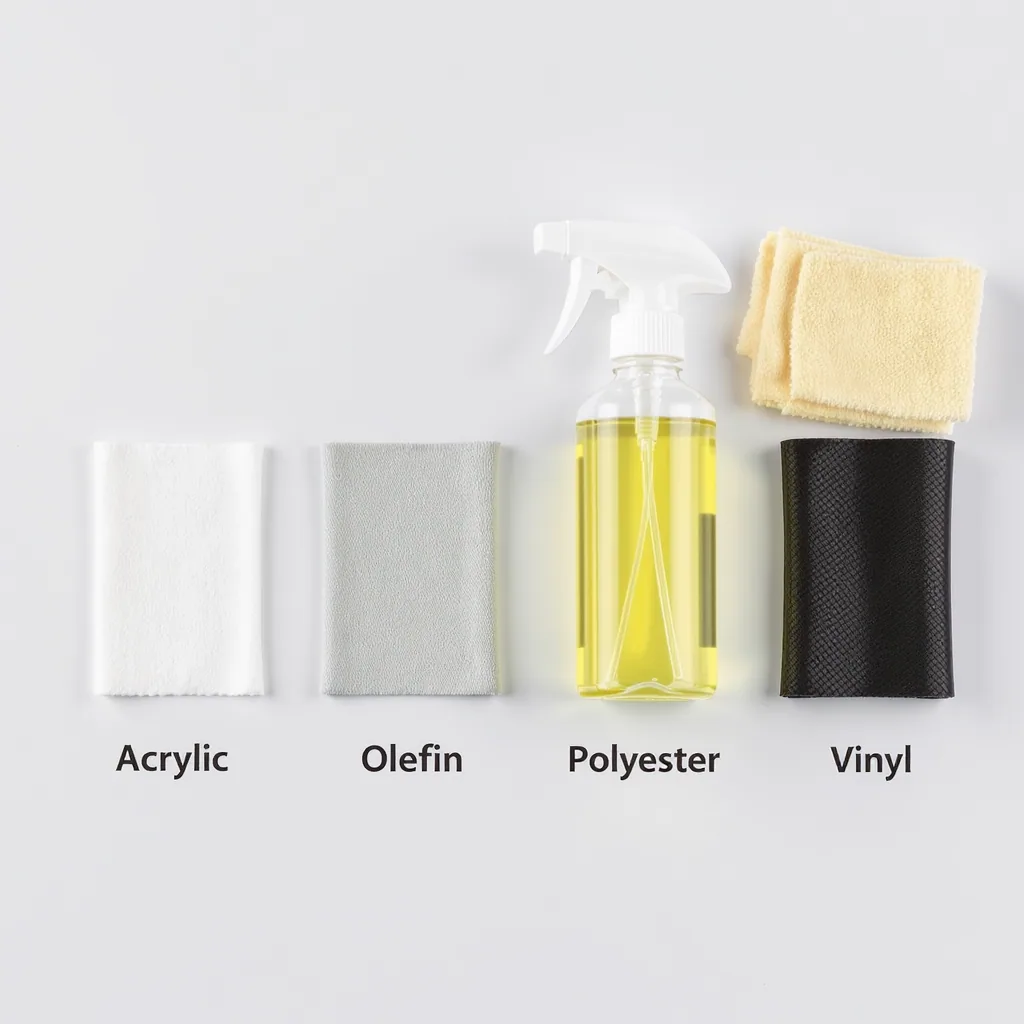
If the tag is missing or faded, you can often identify the fabric by its common characteristics:
- Solution-Dyed Acrylic (e.g., Sunbrella, Outdura): The gold standard for high-end outdoor fabrics. It’s colorfast, fade-resistant, and often has a slightly textured, canvas-like feel. These fabrics are designed for harsh weather and specific cleaners.
- Olefin (Polypropylene): A durable, stain-resistant synthetic often used for more affordable cushions and outdoor rugs. It’s lightweight and has good color retention.
- Polyester and Polyester Blends: Common in many mid-range patio cushions and umbrella canopies. It can have a smoother finish and may be coated with a water-resistant treatment.
- Vinyl or Coated Fabrics: Used for some outdoor cushions and furniture straps. These have a plastic-like, non-porous surface.
When in doubt, consult the manufacturer’s website. For example, Sunbrella’s official care page is an authoritative resource for their fabrics. Correct identification turns a guessing game into a targeted outdoor fabric sap cleaning guide.
Photo by Gustavo Fring on Pexels
The Sap Removal Protocol, Step-by-Step
Once you know your fabric, follow this universal, gentle protocol. This sequence minimizes risk and maximizes your chance of a clean, undamaged result, whether you’re tackling a sap stain patio cushion cleaning job or umbrella fabric sap removal.
1. Remove Excess Sap
If the sap is still soft, gently blot it with a paper towel to soak up as much as possible. For hardened sap, use a dull edge like a plastic spoon or a credit card to carefully scrape off the bulk without digging into the fabric fibers.
2. The Non-Negotiable Spot Test
Always test your chosen cleaning solution in an inconspicuous area first (like the underside of a cushion or the back of an umbrella panel). Apply a small amount, wait 10-15 minutes, then check for color bleeding, fading, or texture change. If anything seems off, stop and try a milder option.
3. Apply the Appropriate Solvent
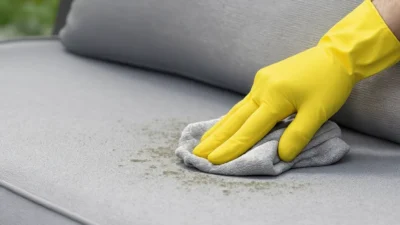
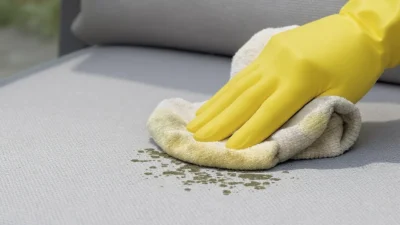
Based on your fabric identification from the previous section, apply the recommended solvent (detailed next) to a clean, white cloth—never pour it directly onto the fabric. Dab the cloth onto the sap stain, letting the solvent work to dissolve the resin.
4. Blot, Don’t Rub
Work from the outside of the stain inward. Use a dabbing or blotting motion. Rubbing can grind the sap deeper into the fibers or distort the fabric’s weave.
5. Rinse and Neutralize
Once the sap is gone, dab the area with a cloth dampened with a mild solution of dish soap and cool water to remove any solvent residue. Then, blot with a clean, water-dampened cloth to rinse.
6. Air Dry Completely
Allow the fabric to air dry fully before using the cushion or closing the umbrella. Do not apply heat or use a hair dryer, as this can set any remaining residue.
Choosing Your Solvent: A Fabric-by-Fabric Guide
This is where your identification work pays off. The right solvent dissolves sap efficiently; the wrong one can cause lasting harm. Here’s your playbook for sap removal for outdoor furniture by material.
For Solution-Dyed Acrylic (Sunbrella, etc.)
Best Solvent: Isopropyl (rubbing) alcohol (70% concentration is ideal).
Why it works: Alcohol is excellent at breaking down pine resin and sap without harming the robust, solution-dyed fibers. Many manufacturers specifically recommend it.
Precaution: Use it sparingly on a cloth. For extensive stains, a dedicated cleaner like Sunbrella’s own Cleaner & Restorer is a safe, effective bet for how to remove sap from Sunbrella fabric.
For Olefin
Best Solvent: Rubbing alcohol or a mild dish soap solution.
Why it works: Olefin’s inherent stain resistance makes it relatively forgiving. Alcohol is often effective, but a degreasing dish soap (like Dawn) mixed with water can also lift the sap without risk of damaging any protective coatings.
For Polyester and Blends
Best Solvent: Mild dish soap solution or a citrus-based cleaner (like Goo Gone).
Why it works & the caution: Polyester can be sensitive. Alcohol might strip water-repellent finishes or affect dyes. Start with a soapy water scrub. For stubborn sap, a citrus-based cleaner is often a safer alternative to harsher solvents for cleaning tree resin from patio cushions made of polyester.
For Vinyl or Coated Fabrics
Best Solvent: Mild soap and water only.
Why it works & the strict rule: The non-porous surface means sap often sits on top. Harsh chemicals like alcohol or acetone can dry out, crack, or discolor the vinyl. Use a soft cloth with soapy water, and be patient with gentle wiping.
Common Mistakes That Ruin Outdoor Fabrics
In the rush to get sap out of outdoor umbrella fabric, it’s easy to reach for a powerful solution without considering the consequences. Avoid these frequent errors to save your furniture from permanent damage.
- Using Nail Polish Remover (Acetone): Acetone is far too aggressive for most outdoor fabrics. It will almost certainly strip dyes, dissolve protective coatings, and can literally melt some synthetic fibers.
- Scrubbing Aggressively: Vigorous rubbing doesn’t lift sap—it embeds it deeper and frays the fabric threads, creating a permanent rough spot.
- Applying Undiluted Bleach or Strong Detergents: These are for mildew, not sap. They will cause rapid color fading and weaken fabric integrity.
- Using Heat (Hair Dryer, Hot Water): Heat will set the sap stain and any accompanying dirt, making it nearly impossible to remove later.
- Skipping the Spot Test: This is the cardinal sin. Assuming “it should be fine” is how small sap stains become large, ruined fabric patches.
Keeping Your Outdoor Space Sap-Free
The key to managing tree sap is a simple, two-part strategy: correct removal and smart prevention. By always identifying your fabric first and following the spot-test protocol, you can confidently tackle any sticky surprise. Remember, the goal is to dissolve the sap, not attack the fabric.
To spend less time on sap stain removal by fabric type, shift your focus forward. Using quality furniture covers when not in use is your first line of defense. If possible, consider trimming back overhanging tree branches. Finally, a routine clean with mild soap and water—before sap season hits—helps maintain the fabric’s finish, making future clean-ups much easier. With this proactive approach, you can enjoy your outdoor oasis without the sticky worries.